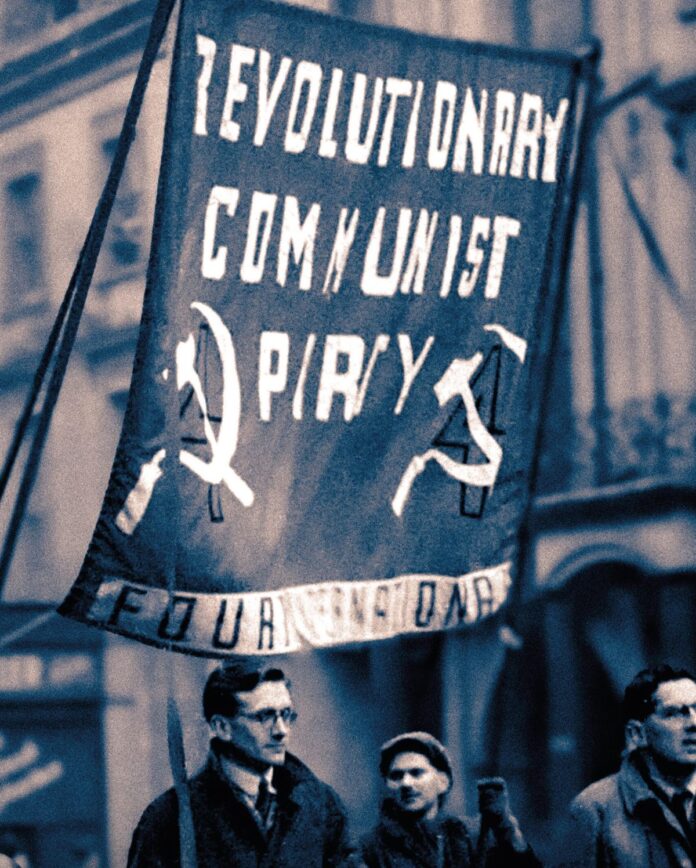
The history of the British non-Labour left is often portrayed as a bewildering series of splits over the ‘true’ legacy of the Russian Revolution and fealty to one or other esoteric analysis of the place of the party in relation to the working class. This collection, part of a series of books by the editors and others charting the recent history of this political landscape, offers a much wider and more interesting analysis.
It’s an analysis that helps the reader recognise both some of the strengths of these parties (they can be both relatively long-lasting and wield an influence on political discourse that belies their far from mass membership levels, for example) and their many weaknesses, of which more later, as well as broadening out the picture to include aspects of recent history that get far less attention. Although an academic tome, the contributions are, on the whole, very readable and concerned mostly with charting political history rather than an engagement with theory or the writings that have inspired such groups.
The collection, as the title suggests, attempts to go beyond just the traditional focus on Trotskyist-inspired groups to cover the mosaic of organisations and alliances in the post-war far left and their relationship to both the (UK) state and international liberation struggles, from Ireland to Malaysia and Chile in particular.
Interesting comparisons can also be made between attitudes by many on the left to liberation struggles on the world stage and ‘internal’ ones. Support for Vietnam was a potentially unifying issue in the late 1960s, in the way Palestine should be now, for example, but the struggle against oppression of black community organisations within the UK was something many predominantly white left groups found much more prickly. The chapters by Hancox and Wild and Lubbers provide some excellent history of this.
One interesting aspect of this part of recent history that the latter note is how it was only when black-led movements started to make connections with Trotskyist and other, mostly white organisations, that they became vulnerable to informers and infiltrators working for the police and secret services, for obvious reasons.
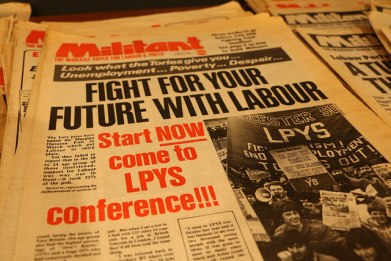
This kind of targeting by the state was nothing new within Britain of course, but there possibly still awaits a thorough analysis of the underlying logic of these actions, which, I suspect, are often much less to do with the far left’s belief in its own supposed revolutionary potential and much more to do with short-to-medium term conceptions of the interests of capital, international political alliances and conceptions of public order – hence the otherwise ludicrous use of resources to target the Young Liberals because of the involvement of people like Peter Hain in the anti-apartheid movement.
The chapter here by Chris Brian gives a good overview of some of this secret state activity and Aidan Beatty notes how it played into the already existing paranoia of groups like the WRP, although their downfall of course was probably predictable given the authoritarian and thuggish misogyny of Gerry Healy. It is likely, for example, that the UK state is now devoting more resources to the Green Party, whatever its detractors on the left might say about its often woolly-minded liberalism, than it is to the stagnating sects of the far left, because it is considered a source of intelligence about those also involved in groups like Extinction Rebellion or Palestinian solidarity; something that should possibly cause the left to reconsider what are the real cracks in the legitimacy of the state and economy that could be usefully leveraged.
There have of course been groups on the left that have tried their best to take part in coalition politics, making common cause rather than trying to co-opt local or wider social struggles and there are excellent chapters in here on Big Flame, the activities of trades councils and the intersection of the left with aspects of the women’s liberation movement and the claimants’ movement.
What is particularly informative is to read these alongside those focussing on the politics of entryism, such as that by Sigoillot and the experience of parties like the WRP. Entryism was never less than a divisive tactic of course – even if at points it promised to force Labour to shift leftwards – and often divisive amongst Trotskyists themselves, divisions ironically exacerbated by the pronouncements on it by Trotsky himself. However, it is probably the case that there are few that would consider it a viable policy in the current circumstances.
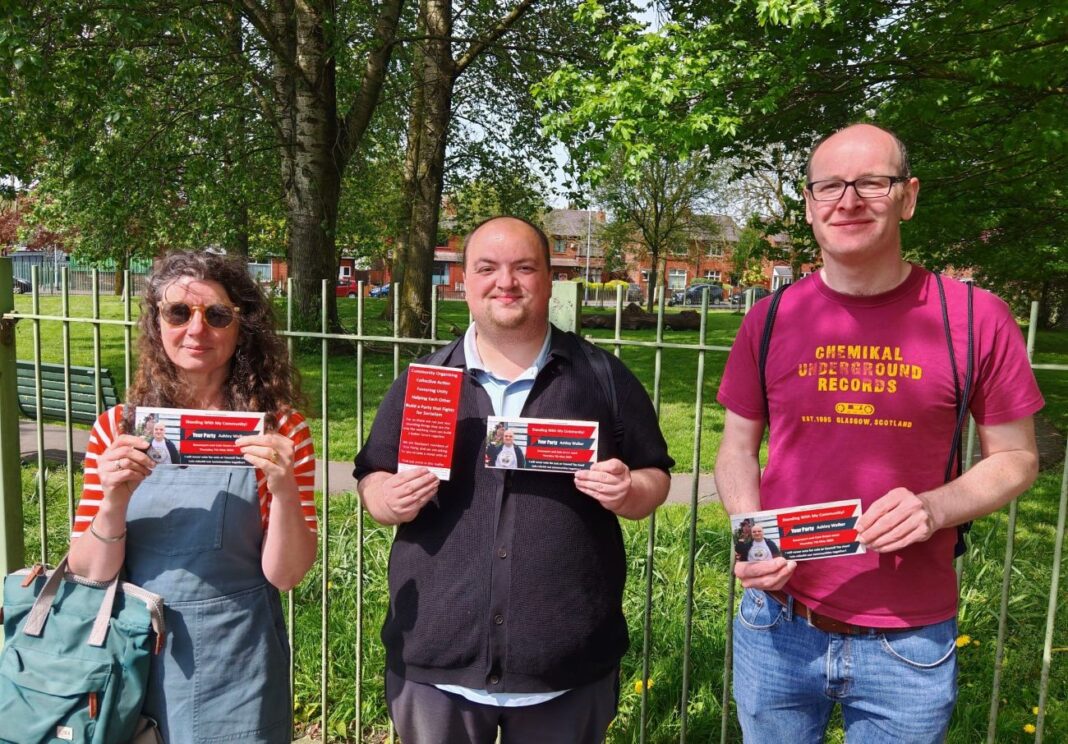
A reading of this volume overall, however, suggests an ongoing issue for the far left that it has yet to design a solution for – how to organise a party that is both open to working with others on an equal footing, but can still continue to keep its separate identity over time. The promise of Your Party to achieve this has, it appears, already disappeared in a mire of personality politics and performative sectarianism. The experience of Leninist vanguardism in Britain was always more centralist than democratic and its often secretive and undemocratic procedures all too easily masked the activities of those like Healy and others more recently seeking the vulnerable to abuse and exploit.
As Frost notes in the final chapter of this fascinating and informative text, Corbynism briefly promised such a broad-church-leftism under the auspices of his leadership of the Labour Party, a promise that hit the wall of not just the establishment but, probably more crucially, the right-wing Labour establishment, which has been busy trying to bury it ever since. There are lessons, however, in this collection regarding what should be the centrality of the pursuit of democracy and solidarity for the left in trying to do this.
In Solidarity, Under Suspicion: The British far left from1956 by Daniel Frost and Evan Smith is published by Manchester University Press (ISBN: 9781526179593).
Subscribe to our regular updates to receive the latest articles, analysis and news direct to your inbox at https://theleftlane.media/subscribe/