This is the kind of thing that socialists in the UK are NOT supposed to say.
But after researching and writing more than 25 articles about Your Party (YP) and Collective, its predecessor, since September 2024, I am certain of one thing – for the overall good of the socialist movement and of YP, Jeremy Corbyn, who turns 77 next week, should resign as its leader. And without delay. We urgently need an effective and collective socialist voice in the land – and we don’t have one now.
It is hardly controversial to suggest that YP has – how do we put this? – underperformed at the box office. To plummet from 800,000 supporters in September 2025 to less than 50,000 members today (and the YP leaders will not reveal the party’s total membership figures and so it may be even fewer) is hardly an inspiring trajectory.
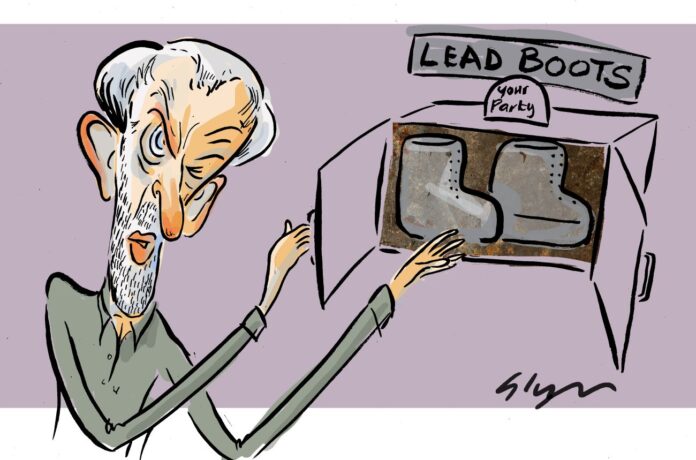
And talk about lead boots! Not a single official branch has yet been created by Corbyn’s party which was first announced in late July 2025. As recently reported by The Left Lane, the first one will be formed next month on the Isle of Wight. At the pleasure of YP headquarters, 300 more local branch launches are supposed to follow. Only a supreme optimist thinks that will actually happen.
And when you learn below how YP’s unofficial ‘chief executive’ operates, you will be even more sceptical.
Dissent is widespread in the ranks
In truth, YP has almost become all but irrelevant to the political and class struggle. My own YP proto branch in Norfolk has held a mere three meetings (count ‘em!) in nine months, even though a member of YP’s central executive committee (CEC) picked by Corbyn is a leading figure in this so-called proto branch. Across the UK, tens of thousands have migrated to the Greens.
Dissent in the ranks of YP is widespread, though there are few YP avenues available to express it. Many of our Scots colleagues have departed as a result of the hostile and controlling reception they faced and are expected to create a new party. A YP colleague in Wales texted me recently to say most YP members there were “disappointed at a lost opportunity in Wales”.
Well-known filmmaker Ken Loach, a long-time political associate of Corbyn, used the same “lost opportunity” phrase to characterise YP in a weekend interview with The Guardian. Referring to the long-time Labour (and now independent) MP as well as MP Zarah Sultana, once a leading YP figure but now essentially silenced as a YP voice, Loach concluded “some of the behaviours were very poor”.
But if we are to move forward, we need to specify precisely what those “poor” behaviours were (and still are) and do an upfront political critique of the direction that this supposed “working-class socialist party” is headed. As Corbyn is the undisputed and unchallenged single leader of Your Party, this critique – this battle of ideas if you will – will focus on Corbyn’s ideas and actions.
As an aside, some of us remain perplexed why MP Corbyn still refuses to associate himself publicly – and officially – with Your Party even though his followers on Corbyn’s own The Many slate named him YP’s parliamentary leader before the party’s CEC first met. In the House of Commons, he still remains listed as an independent MP.
Five reasons Corbyn should resign as Your Party leader
Here are five reasons Corbyn should step aside.
1) He has shown very poor judgement in picking who should lead and administer Your Party.
A socialist party should be led by socialists with political experience as socialists. Let’s be clear, just because you are an MP who ran on a pro-Gaza ticket in 2024 does not make you a socialist. Yet four non-socialist MPs (with zero experience in the socialist movement) but who properly opposed the Israeli genocide were personally picked by Corbyn to help him (and Sultana) lead YP from its start last summer.
Not surprisingly, all six made numerous political mistakes. For example, the anonymous and repeated briefings in the mainstream press by Corbyn’s assistants against political opponents in your own party is hardly a tenet of socialist morality – at least not in my books it isn’t. The four pro-Gaza MPs stayed quiet over these divisive briefings, after all, they were beholden to Corbyn. Two of these MPs quit YP even before the party’s founding conference.
Corbyn has done no better in choosing the paid YP staff or the members of his The Many electoral slate for the party’s internal elections held in the winter of 2026. Even worse, at the top of his “bad choice” pile was Karie Murphy, who ran Corbyn’s office seven to eight years ago when he was Labour leader. She was forced out back then because she caused so much turmoil.
In the party and on the YP CEC, Murphy (who is unelected and is responsible only to Corbyn) essentially operates as YP’s unofficial ‘chief executive’ in the words of someone who has seen her in action. In that all-powerful YP role, she is even more interventionist than a trade union or political party general secretary would normally be. (It is worth noting that Murphy is the long-time partner of Len McCluskey, former Unite general secretary. It is also worth noting, as The Observer explained in September 2025, that McCluskey “used the union’s own funds [it was thousands of pounds] to pay for legal steps to keep secret a long-standing relationship with the Labour leader Jeremy Corbyn’s chief of staff, Karie Murphy, between 2017 and 2019”.)
Murphy provides speaking notes and the script
As The Left Lane has only just learned from an YP insider, Murphy appears to set the agenda for YP CEC meetings and personally picked all seven members of the CEC officers group who control the CEC, all of whom are members of Corbyn’s The Many slate. The subsequent vote for posts was window dressing.
Almost unbelievably, Murphy even prepares speaking notes and a worked-out script in advance for The Many members to use at meetings. In other words, Murphy does Corbyn’s hands-on supervisory work for him. As a result, Murphy and Corbyn keep the CEC under tight control and never lose any votes.
This all became rather comical at one CEC session a while ago when the ‘wrong side’ won one vote due to a cock-up. Murphy’s script needed to be rewritten on the spot to avoid CEC members fluffing their lines.
It is fair to say that this is not quite the regime that YP members had in mind when, at the founding conference, they voted for “collective leadership”. Collective poodles anyone?
Corbyn himself is regularly absent from CEC meetings, either missing them entirely or often staying for only a few minutes at the start and returning near the end. Also, Murphy tries to make sure Corbyn avoids being present during any votes on controversial issues. He skipped, for example, the vote on dual membership, a vote which led to another round of YP resignations.
As for who are the other YP employees? Some have been drafted in from Corbyn’s own Peace and Justice Project which played a key organising role in the recent CEC elections, an outside intervention which raised more than a few eyebrows. Conveniently, that project operates from the same North London address as Your Party UK Ltd. The financial arrangements between the two have not been disclosed.
Most of the rest of Corbyn’s The Many slate who, along with Murphy, run YP in a dictatorial fashion (see below) are highly ineffective either as political strategists or as campaign organisers. Instead, they are ex-Momentumites, former Labour insiders (from the years when Corbyn was in charge), former trade union functionaries and the like. And most lack the first skill needed by a political organiser –the ability to mobilise others into action.
By comparison, it is the opponents and critics of the current YP regime who, in the past six weeks or so, have demonstrated most of the political energy still left within YP. For example, see this The Left Lane piece of 4 May 2026 for the range of dissenting activities.
Moreover, not a single member of The Many slate has either the political stature or skills to challenge the Corbyn or Murphy duopoly even if they wanted to. Rather, they are mostly a passive Corbyn fan club following Murphy’s speaking notes. I am sure I am not the only YP member who keeps asking – who wants that?
2) Corbyn has created a secretive, non-accountable and hierarchical party.
At least a thousand words could be written on this subject alone. But briefly.
On secrecy
i. Almost ten months after YP members started paying monthly subs, we have yet to receive an audited statement of how our money has been spent. What’s being hidden?
ii. While it is an easy matter to track down who are the senior admin staff on parties such as the Lib Dems, Labour or the Greens, CEC members who reveal the names of any YP administrative staff have been threatened with disciplinary measures. (The CEC sounds like a gulag!)
iii. And as already mentioned, why can’t we know how many members YP actually has and how many members it has lost or gained since the founding conference? When I asked that question to the YP CEC membership secretary in a Facebook group, she refused to answer. (As a YP member, I asked the same two questions to the YP membership team in an e-mail but again got no answer).
On non-accountability
i. In the same vein, I sent three recorded delivery letters in November 2025 to YP HQ in London (with self-addressed and stamped envelopes inside). I got no reply.
ii. The CEC election results came out at the end of February. Three months later, some of us in Norfolk have some questions we would like to ask of our CEC rep from the East of England region. Wasn’t improved local accountability the main reason for electing CEC members on a regional basis – and which many of us thought was a bad idea? No chance to ask questions or make suggestions has arisen. The CEC is an elite operating on its own and without any oversight by members.
iii. ‘Average’ YP members are not allowed to watch – even as mere non-speaking observers – CEC meetings on Zoom. All we get is rah!-rah! email reports after CEC meetings from chair Jenn Forbes, which are as one-sided and self-serving as a Daily Mail report on an anti-racism event.
On hierarchy
We have already seen how top-down YP is. Its cheerleaders may trot out the slogan that it is “member-led”, but that is a myth. Corbyn is the only person permitted to speak for the party. (He has been in the media a lot of late on the Andy Burham matter – I have never seen him mention YP.) He and, more often, Murphy are the go-to people on all but the most trivial matters. Access to all party funds and data on members is rigidly controlled from a North London office. Non YP-candidates endorsed by Corbyn and YP HQ for the recent elections in London, Birmingham and elsewhere were selected without consulting local YP members. There is very little spontaneity from the grassroots or cross-party engagement or esprit du corps in the ranks or creativity in tactics or approaches. I have not witnessed a single sign of joy.
But YP has gone one step further than typical hierarchical parties as my good friend Darren Galpin recently wrote about his resignation from YP: “The decision taken by The Many faction to use their numerical majority on the party’s central executive committee to monopolise all the key officer roles, alongside the appointment of a paid but anonymous party secretariat, signalled the beginning of the end of my participation in this project.”
In YP, hierarchy is king.
3) Creating two slates, one led by Corbyn and one by Sultana, was a serious blunder.
I have already written at length on this issue and will only touch on the matter again briefly.
From the 11 February 2026 issue of the former The Left Lane: “Internal elections in a political party can both heal and exacerbate political differences. Often acting as a double-edged sword, such elections can provide democratic legitimacy to the winner, but they can also formalise existing factionalism within a party. Everything depends on the context.”
And what was the context of YP as its internal elections of winter 2026 approached? There were two YP leaders – Corbyn and Sultana – and many YP members (but not all) were lining up behind one or the other. And there was an obvious antagonism building between them for weeks during the previous autumn.
What came next was totally predictable and Corbyn, who has been involved in politics for more than 50 years, should have seen what would unfold. Who knows, perhaps he did and he (and Murphy) wanted that outcome? Two slates formed, one slate (Corbyn’s) won after an election marked by unfairness, and the factionalism got even worse. The schism became more pronounced when one slate (Corbyn’s) monopolised all seven posts in the CEC’s officers’ group.
One article I read on internal party elections in parties wracked by factionalism said that such a vote “requires skilled leadership to turn it into a long-term healing process”. Neither Corbyn nor his fixer Murphy are the two people many would turn to if they wanted “skilled leadership”. YP has not healed, it is an open sore.

4) YP has adopted a failing Corbyn-ish strategy
Building a socialist political party in 2026 Britain is no easy task. For a start, you need a worked out and seriously debated political strategy. The one that emerged from YP’s founding conference in November 2025 is so simplistic that it is not worth discussing and has already been breached repeatedly.
The one ‘strategical’ YP thread worth examining here is the idea that the main way to build YP is to affiliate with local groups around the UK and support their local “independent” candidates (and local parties). Corbyn is one of the chief proponents of this view and he has held this orientation view for over a year as The Left Lane reported back in February 2025.
Reduced to a not always helpful binary, his view is in opposition to the approach that says the main way to build a mass socialist party to focus primarily on building that party while, of course, working with other parties, intervening in the mass movement, conducting widespread campaigns, running in elections under your own name and so forth. This is the approach taken by arguably the most successful socialist party in Europe, the Belgian Workers Party. See this November 2024 article headed Today is a good day for a “good news” story of resistance or listen to this recent Novara Media podcast, The Most Influential Leftist You’ve Never Heard of.
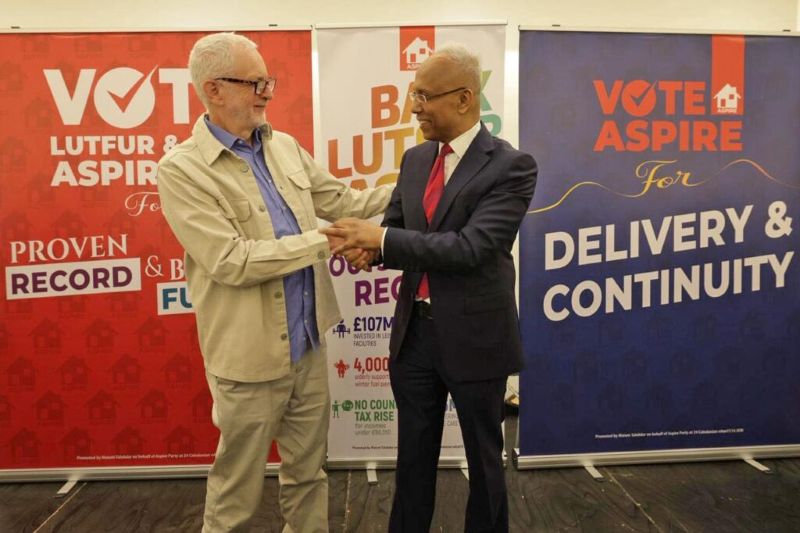
There are two (of many) problems with Corbyn’s approach. First, where has relying on local “independents” to build a mass socialist party ever worked successfully, either in the UK or elsewhere? I have asked that question of a number of leftie friends and no one can think of a single example. Second, why has Corbyn and YP chosen such suspect parties as Aspire in Tower Hamlets to endorse and essentially affiliate with. Read this recent The Left Lane article by a Bangladeshi socialist that blows the whistle on this party – a party which YP laughably said had provided this London borough with a “shining example of municipal socialism”. It is the most-read article on The Left Lane since we re-launched on 1 May this year.
It is definitely back to the drawing board for YP on the question of its strategic direction.
5) Both Corbyn and the most of the YP leadership have not broken with Labourism.
This should come as no surprise. At the age of 14, Corbyn began hanging out in Labour Party circles in North London and was a Labour MP from 1983 to 2024 and party leader from 2015 to 2020. To not put too fine a point on it, Labourism, albeit left Labourism, is in Corbyn’s blood. It also infuses the blood of his associates in The Many slate who control YP. They have left Labour, but Labour hasn’t left them.
Labourism – aka reformism or social democracy – is the main lens through which they view the world, both organisationally and ideologically. They hold the view, for example, that Keir Starmer is the main thing wrong with Labour. Or that the election of the Labour Party, even one led by a leader such as Corbyn, would herald the establishment of socialism in Britain.
In an era when social democracy is collapsing all across Europe, it should come as no surprise that the YP leadership, Corbyn and Murphy, label Tower Hamlets under Aspire as “a shining example of municipal socialism”. They have no political compass and that’s desperately needed in these wretched political times.
This has been a very lengthy article, so thank you for sticking with it all the way to the end.
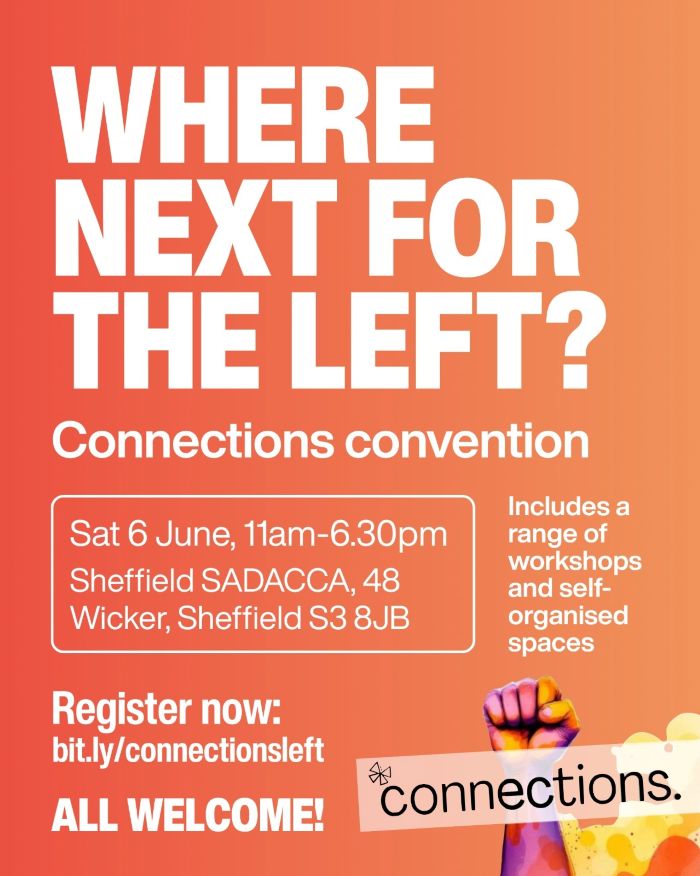
The conclusion is brief. Corbyn stepping aside (and Murphy as well) will NOT solve all of Your Party’s problems. It would only be one starting point in the larger struggle to turn YP around. That may start to occur in a more systematic way at the Connections convention in Sheffield on 6 June 2026.
Alternatively, a new party may be needed.
Subscribe to our regular updates to receive the latest articles, analysis and news direct to your inbox at https://theleftlane.media/subscribe/