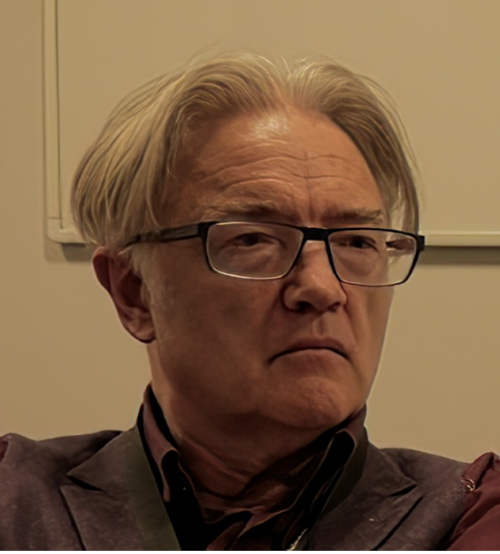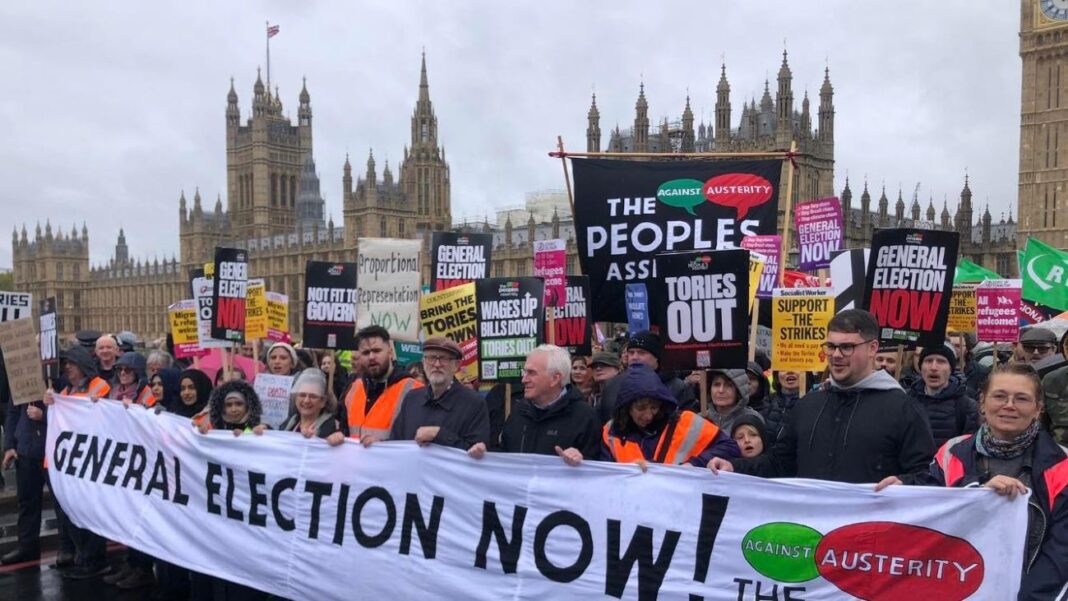
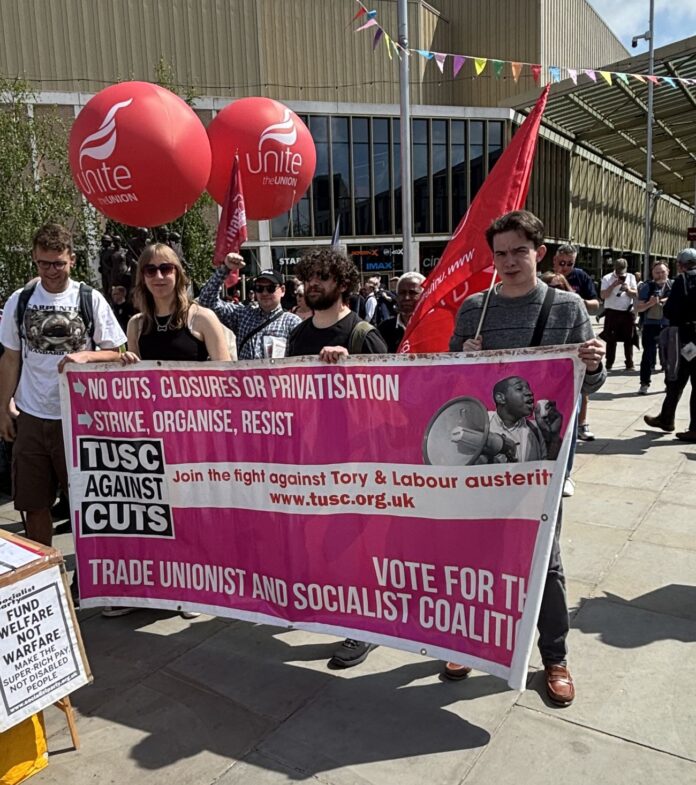
In the 2024 general election, the Workers Party of Britain won 210,252 votes. This was a 0.7% vote share. No seats were won. The Trade Union and Socialist Coalition (TUSC) won 12,901 votes. This is recorded as 0% by rounding down. No seats were won. The Independent Alliance MPs took five seats. However, this success was not based on ideology or programme but mainly on the alienation of Muslim voters from the Labour Party over the Gaza genocide.
In November 2025, Your Party (YP) was launched in Liverpool. In May 2026 YP political officer, Louise Regan, reported that Your Party stood 25 candidates in the local elections. In addition, there were 22 Your Party-backed candidates. The best results were in Birmingham council’s Small Heath ward, in second place behind the Liberal Democrats with a 24.1% share. In West Lancashire, Ron Cooper, a sitting councillor, secured third-place finish with 17.9%. No YP candidates were elected. Judy Cox, writing in Socialist Worker, was right in her assessment that “support for Your Party was dismal”.
The Workers Party of Britain (WPB) did better. They stood 72 candidates including 13 in Scotland. They won 24,000 votes and five council seats (two in Rochdale and one each in Birmingham, Bury and Calderdale) giving them eight in total. In Scotland they won 4,000 votes. Carla Roberts writing in Weekly Worker says: “When it comes to the rest of the left, only George Galloway’s Workers Party of Britain had any kind of success.”
The Trade Union and Socialist Coalition had the worst set of results for the longest serving organisation. It put forward 289 candidates across 64 councils. Their programme was minimal and locally focused and set out in TUSC’s “six policy guarantees”. The aim was to unite “every trade unionist, anti-cuts campaigner, community or social movement activist and socialists from any party or none”. TUSC won no seats. The largest socialist challenge was therefore the biggest failure.
There were also many local independent candidates. Some were local patriots and others were local socialists. These include the Ealing Community Independents, Harrow Arise, Redbridge Independents, Birmingham independents, Aspire, Your Bradford Independent group, Camden People’s Alliance, and the Walsall Independents. Council seats were won by independent local parties for example in Harrow, Camden, Bradford and Tower Hamlets. These included Pamela Fitzpatrick, who won a seat in the Marlborough Ward in Harrow, and the Camden People’s Alliance candidate, Shah Abdul Majeed Bakth, both endorsed by Your Party.
Palestine
In the 2026 elections English socialism was represented by three national parties (TUSC, WPB and Your Party) and many small Marxist groups. The fragmented character of the movement reflects a long history of sectarian politics. However, one factor that has tended to unite the left has been opposition to genocide and support for Palestinian liberation.
Duncan Chapel in his Red Mole Substack puts the better performance of the Workers Party to its appeal “in specific Muslim-majority areas where Gaza has fractured Labour loyalties”. He argues that the Workers Party performed better because it “converted Gaza-driven disillusionment into results where the broader left did not”. TUSC’s six minimum policy demands did not include Palestine.
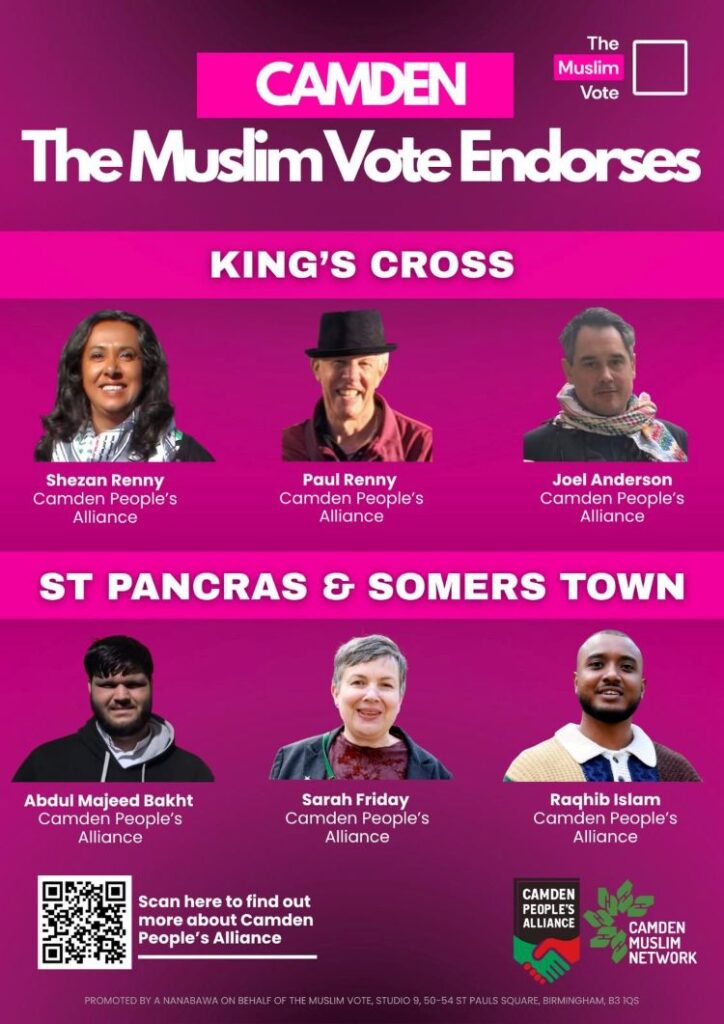
Chapel notes that in addition to the Workers Party victories, independent local parties “also won in urban areas with large Muslim populations, which suggests the same vote is finding multiple vehicles rather than consolidating into one”. Palestine not English Socialism is the common thread and explains these few victories. If statisticians could isolate the Gaza effect, then English socialism would likely have won no seats at all.
Bad news
The conclusion from these results is stark. TUSC and Your Party failed to win a single council seat or seat in the Scottish and Welsh Parliaments. The Workers Party and some local independents did win a few council seats. Carla Roberts in the Weekly Worker concludes that “Apart from a couple of odd exceptions …the average vote for the left is under one percent”. As she says, “the reality is that the left did very badly”.
The May elections confirm what we have long suspected. English socialism, or socialism-in-England, has failed to make any breakthrough or reverse its declining fortunes. Despite the huge efforts of members of the Trade Union and Socialist Coalition (289 candidates), the Workers Party of Britain (72 candidates) and Your Party (25 candidates) no significant improvement was registered in these elections. Your Party is the only one with an excuse that it is only just getting started.
Your Party’s central executive committee met on 10 May 2026 to assess these poor results. Official optimism filled the meeting with hope. Carl Roberts reported that “it was a magnificent example of self-deception and make-believe. It started off with an ‘update’ by the dear leader himself. Jeremy spoke about the ‘tremendous successes’ of the local elections.”
Titanic effect
The May 2026 elections provide more evidence that English socialism is failing. The biggest problem is self-denial, the refusal to recognise there is anything fundamentally wrong. The solution remains ‘rinse and repeat’. One more push before it comes good. On board this Titanic, the fundamental problem is the need for a strategic change of course before it is too late. Instead, English socialists are busy shuffling the deck chairs, hoping to find the right combination. Meanwhile the orchestra plays on, inducing a sense of calm and normality.
The problem of English socialism appears as organisational fragmentation. Three rival socialist national parties and multiple local-patriotic ‘parties’ contesting these elections is a measure of failure. This is not so much the cause of failure but a measure of it. The real problem is that the urgent need for a new strategy and programme that recognises the nature of the period we are living through and can unite the working class.
Your Party has simply reproduced this problem of programmatic disorientation on a microscopic scale by expelling the Marxist groups and ousting the interim Scottish executive committee in a move against Scottish anti-unionists and republicans.
The monarchy, the union and English socialism belong in the dustbin of history. The revolutionary solution is to abolish them immediately. The longer they linger the worse it gets. English socialism is long divided by a civil war between ‘realism’ of left-reformism and the abstract ‘revolutionary’ politics of the communist sects.
Workers Party of Britain leader George Galloway, in his interview on the Crispin Flintoff Show, put his finger on the problem. The English left has failed to develop a theory and programme for a left-populist party that can compete with Reform. They have simply handed the job to the Green Party.