
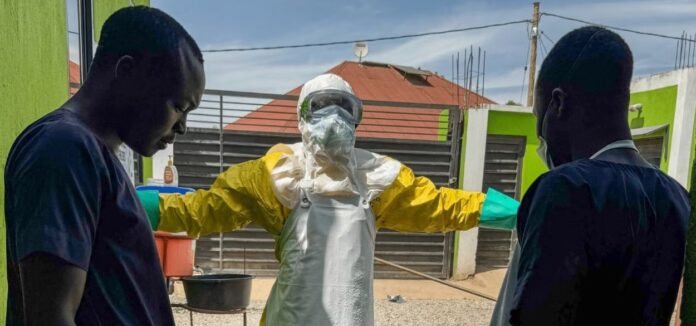
Health authorities are racing to contain a rapidly escalating Ebola outbreak in eastern Democratic Republic of the Congo (DRC) after the World Health Organization (WHO) declared an epidemic of the Bundibugyo strain of Ebola on 15 May 2026. The outbreak, the latest of 17 recorded in the Great Lakes region, has claimed 250 lives and is suspected to have infected more than 1,000 people as of 27 May. In response, the WHO, the Africa Centres for Disease Control and Prevention (Africa CDC) and other international health agencies have deployed emergency medical teams and resources to the region.
Officials warn that this 2026 Bundibugyo outbreak could become one of the most serious Ebola epidemics in recent history, with the epidemic on track to surpass the 2014 West African outbreak that infected more than 28,000 and killed more than 11,000 people.
The centre of this outbreak is a town called Mongbwalu, located in Ituri province in the eastern DRC, Mongbwalu is an artisanal gold mining town and important trading and logistics post for the various towns in the region. Artisanal gold mining is essential to the economic fabric of the region, with up to 500,000 of the population of Ituri relying on artisanal mining operations to sustain themselves. Experts highlight that for every individual miner, up to four people are dependent on their income.
But what connects Ebola to gold mining? The extraction of resources such as gold is intrinsically linked to epidemic outbreaks. The globalised architecture of resource exploitation in conflicts that delivers gold jewellery to our shops provides gold as a key element in our phones and devices and that shapes conflict in the region. It is in fact directly responsible for increased risk of outbreaks of disease like Ebola.
What is artisanal mining?
While artisanal denotes a small-scale operation, where individuals or small groups band together to pan rivers for cobalt, diamonds and gold, this form of resource extraction is anything but small scale. Accounting for 20% of the global gold supply on international markets, artisanal mining employs 40 million people globally, compared to a global total of seven million in the industrial mining sector.
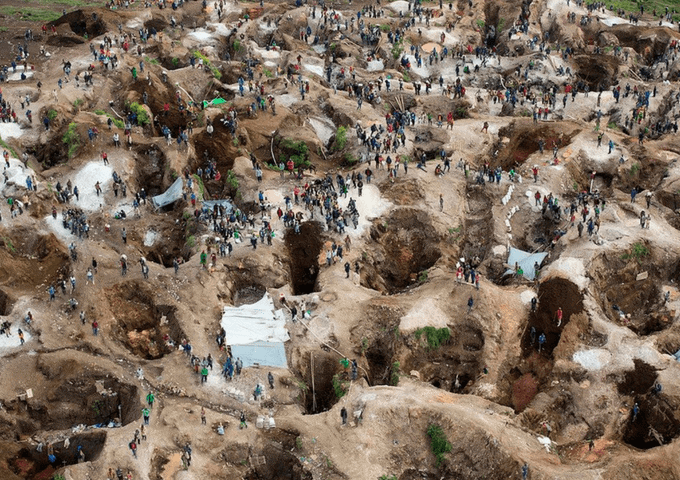
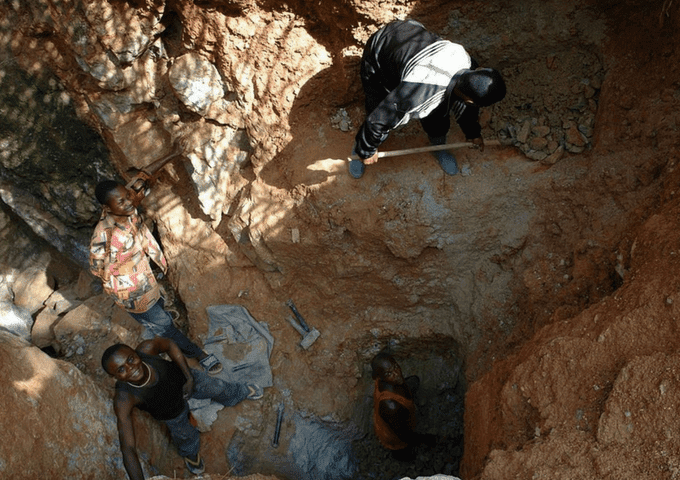
In locations like Mongbwalu and Bunia in Ituri province, the centre of the current Ebola epidemic, these mines provide the majority employment for those living and working in the hard-to-reach towns and peripheries of the DRC. Artisanal mining relies on manpower intensive methods for extracting resources, often operating out of open pit mines, dug 20-30 metres into the ground, using basic tools like shovels, spades and picks. The mines themselves are often large complex underground chasms dug out by miners, each stretching hundreds of metres across riverbanks and deep into forested areas.
Ebola and artisanal mining – what’s the link?
The material conditions of the workers is key to understanding the link between these miners and disease outbreaks. Economies reliant on informal sectors are often detrimental to the health of workers, who suffer cramped and crowded living conditions, no PPE, with poor water and sanitation infrastructure. Artisanal miners are often left in working conditions that force them to use contaminated drinking water, with limited access to healthcare facilities, which are often hundreds of kilometres apart.
These unsanitary conditions increase the risk of the transmission of disease between humans. With shared contaminated water sources, miners living in cramped conditions are bound to pass on the disease when already infected. Ebola has an incubation period of up to two weeks and this means that individuals who are infected with it go for up to two weeks without showing signs and symptoms.
Because artisanal workers are transitory in their working patterns, travelling from homes and villages, to mines, to towns, in the two-week incubation period, an infected worker can pass through many areas before falling ill, massively increasing the risk of transmission between communities.
How does artisanal mining cause Ebola outbreaks?
Not only does the material condition of workers in artisanal mines increase the risk of the transmission of disease, but artisanal mining itself, in its role as the lifeblood of the economy of Ituri province, is the reason Ebola infects humans to begin with. Mines increase the proximity of infected animals to human populations through bushmeat, with the poor road network dictating individual mine’s access to agricultural infrastructure. Miners often rely on poached and hunted animals to sustain themselves.
Communities engaged in artisanal mining in the eastern DRC predominantly rely on forest antelope, monkey and boar, sold in restaurants on, or nearby, sites, for everyday sustenance. Miners often rely on poached and hunted animals to sustain themselves throughout the working day. The further into forest reserves mines expand, the more likely that these animals being hunted for food are exposed to, or infected by, natural carriers for diseases like Ebola, such as fruit bats.
Bats act as hosts for the Ebola virus, meaning that even though they carry Ebola, they generally show no symptoms and remain unaffected by the disease. Bats then pass on the disease to animals living in the same forests, through contaminating the same water or food sources. When artisanal mining operation further penetrates forests, there becomes an increased risk that disease-carrying animals end up in the food supply for humans, greatly increasing the reality of Ebola spillover into humans.
Deforestation, caused by artisanal mining, also causes an increased reality of disease spillover into human populations, as bats and animals living in tree canopies end up further exposed to workers following the felling of trees. Ebola isn’t the only disease where this is an issue. Outbreaks of malaria, yellow fever and leptospirosis have all been linked to artisanal gold mining operations the world over, from the Amazon to the DRC.
Western cash is funding armed groups in the name of ‘peace’
The EU in 2023 approved a €20m grant to the 31st Brigade of the FARDC, the DRC’s armed forces, to be used for equipment, weapons and training, to be delivered by the Belgian military, who are operating a training mission at the behest of the EU for the Congolese government. In the words of the EU this grant is designed with the aim of “preventing conflict, preserving peace and strengthening international security and stability”.
In reality, the 31st Brigade has been linked by a UN panel of experts in the DRC to gold smuggling, profiteering and extortion, all alongside allegations that the brigade often acts as armed contractors for mines operated by Chinese corporations in the Eastern DRC.
The link between the global gold supply chain, conflict and Ebola are evident. Foreign interests to the DRC, from the EU, UK, US, but also the UAE and China, all provide top cover and funding for armed groups and interventions in the region, in the name of ‘securing peace’. The reality of this couldn’t be further from the truth. Government forces, non-state actors, militia groups and criminal organisations often run rackets on artisanal mining communities, with groups often involved in illegal levies and taxation, operating roadblocks or sometimes running the mines themselves.
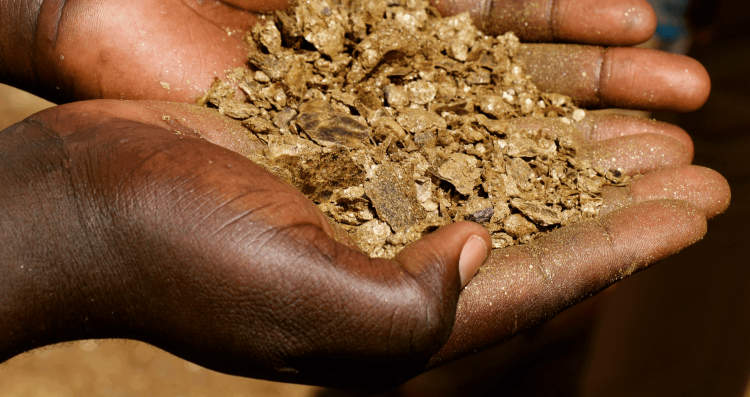
(Photos: All artisanal mining images above from the Intergovernmental Forum on Mining, Minerals, Metals and Sustainable Development.)
Many of the state and non-state actors in the DRC are enmeshed in this international network of trade that feeds gold into overseas markets. A lot of the gold mined in the Eastern DRC is melted down, ending up in neighbouring Uganda and Rwanda, to be turned into jewellery, for onward sale to western countries like the UAE and Saudi Arabia.
While the extraction of gold is not the driver of conflict in the Eastern DRC, armed groups rely on the international architecture of resource extraction to fund their activities, buy vehicles, weapons, equipment and to line pockets for personal interests. Combined with an international interest in keeping the flow of conflict resources open to feed the demand for gold downstream, there is much scope for artisanal mining to expand at an exponential level in the service of the localised war economy.
Governments, institutions and people need to do more to delink themselves from this international architecture of resource exploitation, to stop supporting state and non-state actors in conflict zones that rely on artisanal mining for funds. The dangers aren’t only the physical and material costs, destroyed lives and livelihoods and oppressed communities, but also wider risks surrounding outbreaks of public health crises like Ebola, which experts warn will kill tens of thousands and may spread across the region like wildfire.
Subscribe to our regular updates to receive the latest articles, analysis and news direct to your inbox at https://theleftlane.media/subscribe/