Donald Trump must be getting used to defeats. He desperately wanted the Iranian deal to be signed on Sunday on his 80th birthday so he could prance around as the emperor of peace. But the Iranians were not going to give someone who murdered their leader and thousands of their people this privilege.
History is marching double time. Barely four months ago, Israel and the US launched an unprovoked but calculated attack on Iran. Trump needed the war before he met with China’s president Xi at their summit in Beijing. He allowed Netanyahu’s sweet talk to override Pentagon concerns.
Keir Starmer said on Monday that the “breakthrough” was a “a hugely significant moment”. But there is great scepticism across the world that any temporary peace will last. As this 13 June interview by US journalist Chris Hedges reminded us in a video titled Détente. Or More War?, the US has repeatedly breached or cancelled agreements with Iran over many decades.
A case of Epic Humiliation
Epic Fury turned into its opposite, Epic Humiliation. Usrael (yes, a handy new word of the hour) achieved none of their war aims. Most of CENCOM’s (US) facilities in the Gulf were destroyed including irreplaceable radar stations. Israel was slammed. Usrael rapidly ran out of interceptors.
On the other side, Iran suffered significant material losses and civilian casualties, but by war end, their offensive capabilities were intact, with the CIA reporting 70% of their missiles and 75% of their launchers being battle ready.
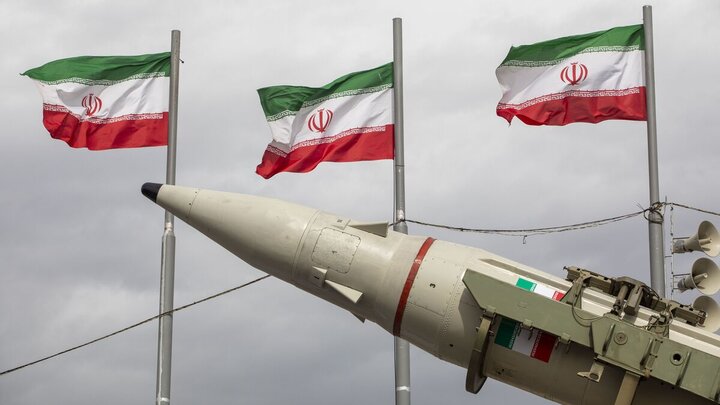
What the war proved once again is that we live in the missile and drone age, not the aircraft age. The US and Israel were fighting a 21st century war with 20th century doctrine. It’s why Iran not the US retained escalation dominance. This was not an outright defeat for the US and Israel. Rather it represented an incontestable dichotomy, namely that the ongoing costs or renewing the war far outweighed the advantages of not returning to war.
Time was on Tehran’s side
Central to this equation was the blocking of the Straits of Hormuz and its impact on the world economy in terms of energy, agriculture and medicine. For this reason, time was on the side of Tehran and against the White House. All Iran had to do was to hold out until the economic pressure grew too intense. And it could hold out, because through its missiles, it held hostage the Gulf states and their enormous energy resources.
Trump represented the consequences of this dichotomy. He veered between threatening to blow Iran off the face of the earth and then claiming a deal was in the pipeline, before wobbling towards threats again. Almost 40 times since 28 February when the US and Israel launched this war of their choice, Trump claimed a “deal” was in the bag. Not only did he turn himself into the laughingstock of the world, but his internal voter approval rating collapsed. Mind you, he did register a 99% poll rating … in Israel. Western leaders were mainly mute.
A bunch of losers who miscalculate
Furthermore, tensions between Israel and the US intensified as often happens between a bunch of losers who miscalculate. Iran stood firm; any peace deal had to include Lebanon. Accordingly, Washington began to reel in Israel much to the dismay of Tel Aviv. But Trump had no choice. He was saving the world economy or capitulating to a country whose strategic value to US imperialism, following the Iranian debacle, had expired.
Below is the 14-point plan which Iran and Pakistan say has been agreed. If this is the definitive document – and we still await to see the US version – then it represents a serious defeat for US imperialism, as Iran has emerged in a stronger position than it was in when it entered the war. And that finally is the true measure of victory.
This is a victory on the scale of Vietnam, not as dramatic as helicopters landing on the roof of the US embassy in Riyadh to rescue Americans or the runways of Kabul, but just as consequential. US military assets are being quietly evacuated into the night away from the Gulf.
This foolhardy war, which hurt so many, including in the UK, marks a definitive step away from the US multi-polar world. It has begun with the reshaping of the entire Gulf region now the US has been exposed as being unable to protect its vassals and vessels there.
One thing Trump got right – the markets loved the pending memorandum of understanding knowing that Trump cannot backtrack now.
The 14 clauses of the MoU with the US, as released by Iran’s Mehr News Agency
- Permanent and immediate cessation of war on all fronts, including Lebanon.
- The US commitment to non-interference in Iran’s internal affairs and respect for the sovereignty of the nation.
- Complete lifting of the naval blockade within 30 days.
- The US commitment to withdraw its forces from around Iran.
- Reopening of the Strait of Hormuz within 30 days under Iranian arrangements.
- Suspension of sanctions on the sale of oil, petrochemical products, and derivatives, and full access of Iran to its financial resources.
- The necessity for the US and its allies to present reconstruction plans for Iran amounting to at least $300bn.
- 60 days of negotiations to reach a final agreement based on nuclear issues and the complete lifting of primary, secondary, US sanctions and UN Security Council and IAEA Board of Governors resolutions.
- Reiteration of Iran’s commitment under the NPT treaty not to produce nuclear weapons.
- During the negotiation period, the US has committed not to add forces in the region and not to impose new sanctions.
- Release of $24bn of Iran’s blocked funds during the 60-day final negotiation period. Half of this amount must be made available to Iran before the start of negotiations.
- Formation of a supervisory mechanism to implement the agreement.
- The final agreement will be approved by a UN Security Council resolution.
- Final negotiations will not begin before the release of half of Iran’s blocked funds, suspension of Iran’s oil sanctions and lifting of the naval blockade and the final agreement will only cover the fate of enriched materials and enrichment, lifting of sanctions and Iran’s economic reconstruction plan. Discussions about Iran’s missile programme and support for resistance groups are definitively removed from the agenda.
Subscribe to our regular updates to receive the latest articles, analysis and news direct to your inbox at https://theleftlane.media/subscribe/