
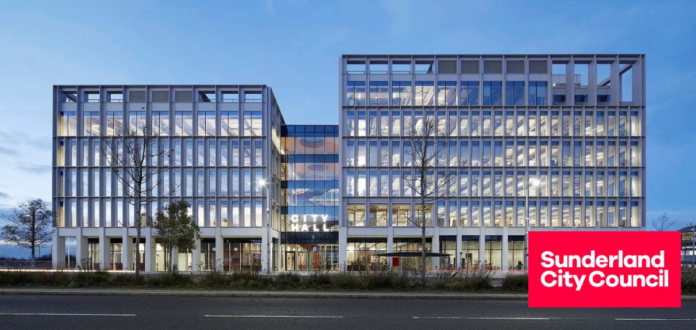
In Sunderland, the turnout for the local elections was 40.5%. That is quite high and Sunderland City Council is one of the councils in the north east that Reform now controls.
So, why did enough Reform voters turn out in Sunderland and in England generally to get an increase in council seats of 1,451? Reform has done particularly well in areas that said yes to Brexit and that vote was all about “taking back control”. Unfortunately, that is not what has happened. These voters are seeing their standard of living decreasing month on month. They are finding it difficult to obtain secure housing.
In Sunderland alone, according to the Ministry of Housing, Communities and Local Government, there were over 3,600 households on the waiting list for social housing in March 2025. Across the whole of the north east, the numbers are around 40,000. Reform, of course, see this as a fertile breeding ground for their divide and conquer tactics to blame immigrants and asylum seekers for the very real deprivations that people in Sunderland and the wider region are experiencing.

The north east and north west hold the highest density of supported asylum seekers relative to their population sizes, with approximately 27 people supported per 10,000 residents. In Sunderland the figure is over 40. And these supported people are increasingly housed not in hotels but in the community. The Old Oak, a film by Ken Loach, addresses this issue. That film had a relatively happy ending with the local people eventually supporting the asylum seekers that were housed in the same street. This is because people eventually realise that we are all human, we all feel the same emotions and have the same needs.
However, there was a core of men who were very resistant to these asylum seekers and saw them as a threat to their way of life, taking houses that should have gone to local people and devaluing their property prices. Of course this wasn’t true. The lack of work that paid a decent wage, landlords buying up the properties in the street and renting them out in very bad condition to people who were causing social problems, were the real causes.
However, it is easy to see why such people are susceptible to the poison that Reform puts out. They voted for Brexit on the understanding that there would be investment in their areas and jobs that paid a decent wage. They were promised better public services and an NHS that would benefit from all the money we wouldn’t have to send to the EU. They were lied to, as we all were. These are the people that Labour has abandoned.
So, what is the answer to reaching these people? One way is something that the journalist and political commentator George Monbiot has described as “radical listening”. Activists going canvassing but with a different focus. People from the community who are prepared to listen, really listen to voters. This approach gets people thinking more seriously about politics and this is essential if we want a more engaged electorate.
It was the approach that defeated the BNP in Barking in 2010. It is something that the left-wing party in France, La France Insoumise, has been doing for years. It was utilised in Zohran Mamdani’s mayoral campaign in New York and also to oust Orban in Hungary. In the words of US Democratic politician Tip O’Neill: “All politics are local”.
However, defeating Reform is going to take a long time, many dedicated activists and a political party which sees the value of this approach. So, we must start now if this tactic is to turn things around by the next general election.
Click here to read all the articles in our Taking on Reform series.
Subscribe to our regular updates to receive the latest articles, analysis and news direct to your inbox at https://theleftlane.media/subscribe/