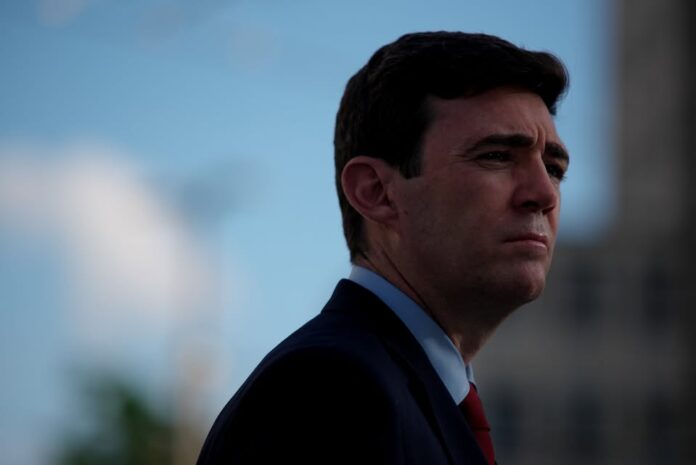
All eyes are on Andy Burnham. Most people were discounting his chances for a run at leader, especially when Labour’s national executive committee (NEC) had previously blocked him from running for a parliamentary byelection once already and most, including me, were predicting they would block him again if a byelection were to come up.
But all that has changed.
Josh Simons, once a director of Labour Together (a core Labour right organisation now ‘rebranded’ as Labour Thinks), stood down from his seat in Makerfield to enable Burnham to have another go at running for parliament. Labour’s NEC took an about turn. In January they voted eight to one to block him from standing in Gorton and Denton and this time the NEC decided, by email rather than a vote at a meeting, to let him run and be selected for the Labour nomination.
This is not the product of a change of personnel on the NEC. And most would note that it is pretty odd for someone on the hard right of Labour to stand down for someone on the ‘soft left’ of the party. Especially when Wes Streeting was preparing for a leadership bid. As recently as 11 May, Streeting had been editing his wesforleader.com website in preparation for a leadership challenge, but the general consensus seemed to be that he didn’t have the required backing of 81 MPs in the parliamentary Labour Party (PLP) to mount a challenge.
Of course, Burnham still has to win a by-election in what, thanks to Starmer’s ‘genius’ political strategy, is now Reform territory. But if he makes it to parliament, it is a fairly safe bet to assume that he will become leader of Labour and prime minister within a matter of months. So where does all that leave the left?
The optimistic take
As the left-wing academic Jeremy Gilbert recently put it, in a live recording of his podcast Culture, Power, Politics: “The unions would have enough of this shit and that they would tell Starmer that it is time to go and that that is the number one thing that has happened here …”
Gilbert attributes Burnham being able to stand as a product of two of Labour’s three power bases – the unions and the membership – turning against Starmer. He also suggests that in Burnham’s recent articles and speeches on issues such as the bond market, public ownership and on many other things, he essentially understands the central problems posed within the UK economy and is prepared to take on these issues.
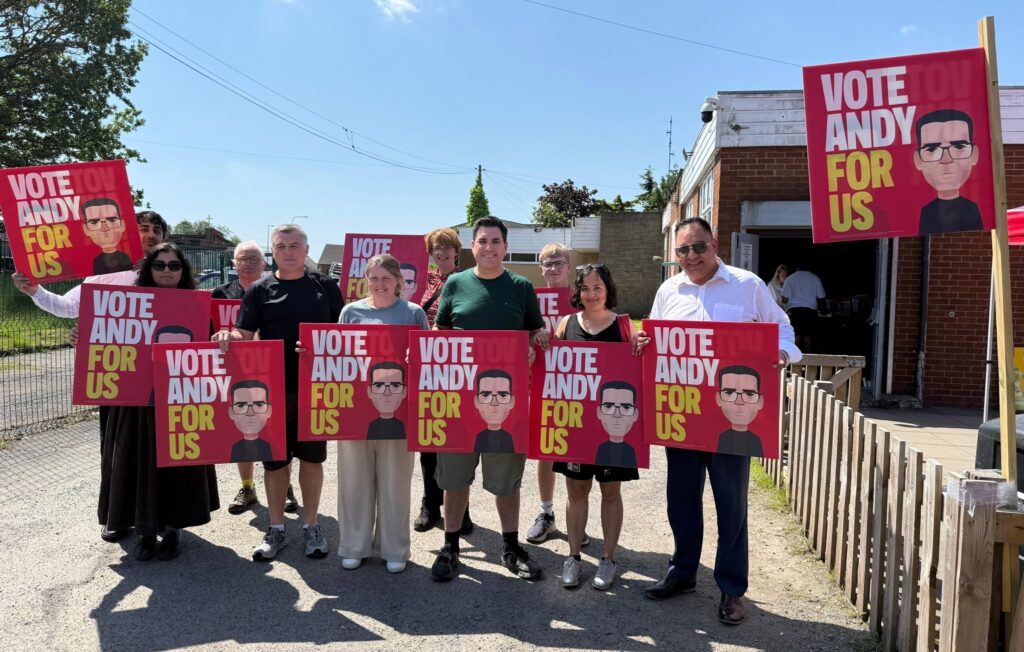
During his time as mayor of Manchester, Burnham has pushed his own brand of municipalism that has made hay from the rollout of the Bee Network (a locally controlled transport initiative), tackling homelessness and building houses. He also co-authored a book, Head North, with Liverpool city region mayor Steve Rotheram, that criticised many of the core aspects of Westminster, the over-centralisation of power, the first past the post voting system and the parliamentary whip.
Perhaps Gilbert is right that Burnham has a stronger critique of the current state of the country than any Labour leader, excluding Corbyn, since Michael Foot. The issue, however, is that there has clearly been a deal done with Labour’s right wing to enable him to stand in Makerfield and we are totally in the dark about what it entails.
As Gilbert notes, Labour is made up of three power bases – the unions, the membership and the PLP. The PLP is now more right wing than it has ever been in history and Gilbert acknowledges this when he says that 240 candidates were blocked by a sub-committee of the NEC in the last five years from standing for Labour. So where does this leave us?
The less optimistic take
Burnham taking on the bond markets would be transformative. But imagining him doing it is another thing altogether. The issue is thorny to say the least. It is an issue that Francois Mitterand tried to tackle in France the 1980s and failed, despite being elected on an overtly socialist mandate and with a country used to mass popular protest and trade union action. Transforming the bond markets requires a direct confrontation with capital – and let’s not forget that we are talking about a leadership hopeful who has a somewhat chequered political history.
Burnham became an MP under Tony Blair, voted for the Iraq war, was in the cabinet under Gordon Brown and ran for leader in 2010 and 2015. In 2015 he was seen as the soft left candidate but was not prepared to articulate a vision of departure from the austerity period.
It seems likely that Burnham will lead on some key issues in power – he may well look to quick wins like the abolition of Ofsted. While he has already tracked back from the nationalisation of water, he may still look to bring in mandatory jail sentences for polluting CEOs. But it remains unlikely that he will really be prepared to try and use the last two years of a parliamentary term to take on a serious confrontation with the structures of capitalism.
What’s more, Burnham was a fan of proportional representation four years ago, more recently he started talking about his support for supplementary voting and then said that any changes to the current system would not be brought in before the 2029 general election. Sources now say that he’s supporting PR again at some time in the future. He’s clearly all over the place on the issue of voting reform and you have to wonder whether he will be similarly flaky on other key issues too.
But just as crucial as his plans for the country are his plans for Labour. The last Labour leader to meaningfully reform the party was Ed Miliband, who created a one-member-one-vote election for leader and the £3 supporter-vote which gave unions a lot of power to recruit their members to vote.
If Burnham fails to restructure Labour, then Wes Streeting will always be waiting in the wings. An incredibly right-wing PLP necessitates reopening the open selection debate more than ever. But this requires an even more optimistic, probably verging on the naive, view of Burnham’s possible Labour leadership.
While Angela Rayner may have skin in the game, having had her long-term partner Sam Tarry undermined by the Labour right’s wranglings, Burnham is viewing things from further afar. It may be that Josh Simons and the NEC have altruistically decided to allow Burnham to stand in Makerfield for the good of the party, however it seems more likely that he has clearly made a deal with the very same people who stitched up previous parliamentary selections to get back into parliament.
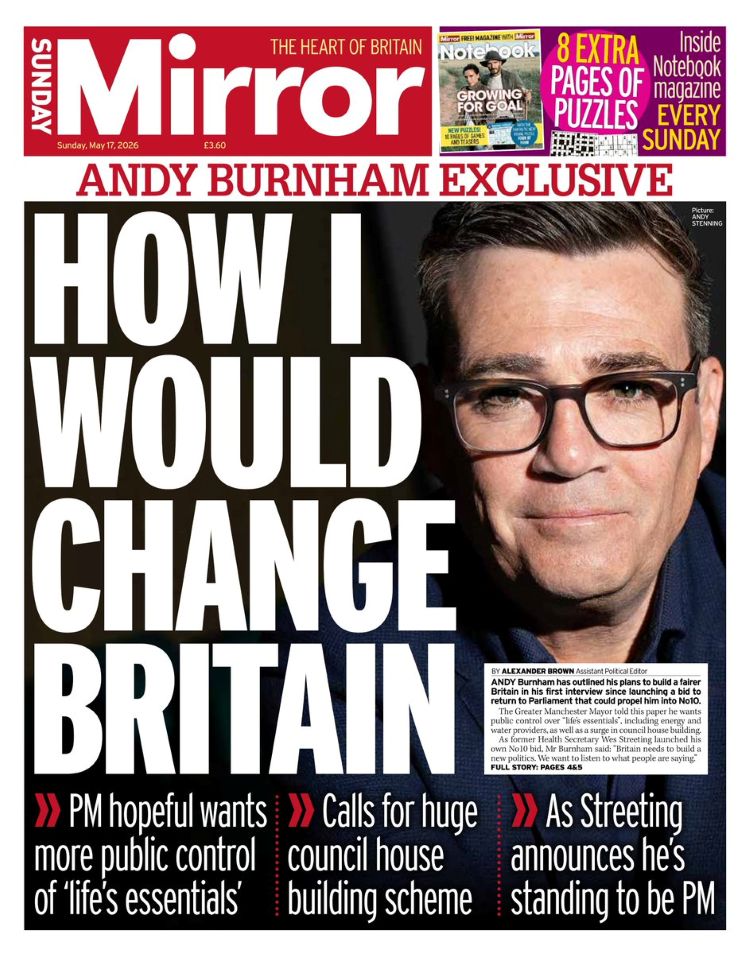
The risk for the left
It seems that the whole of the British left has been closer to a break with labourism than at any other time in living memory. While the left has had institutions like the Independent Labour Party, TUSC and Respect, none have managed to get to 18% in national polls like Zack Polanski’s Green Party has of late. Polanski’s success in gathering the left together has been in part through his excellent social media strategy and his media appearances, but it has also been massively assisted thanks to the well-documented failure of Your Party.
Your Party’s initial 800,000 sign-ups, the joint leadership of Jeremy Corbyn and Zarah Sultana and the backing of other leading left figures, led to people finding an electoral home outside of Labour. However, its subsequent failure has undoubtedly led a fair number of people to join the Greens. This process has likely pulled ex-Labour members into two new electoral vehicles. The success of the Greens at the recent local elections will also have strengthened the commitment of many ex-Labour activists.
Now we are in a difficult position. There is a possibility that the Labour Party could be opening back up for the left, thanks to Burnham. Or at least the space on the left within British politics could be closing for Polanski.
In my view, the Greens’ decision to stand a candidate in Makerfield is a poor one – it lessens the chance of building a progressive alliance and it hurts their appeal to other progressive voters. Many progressives will see Burnham as the only plausible way to stop Farage and if the Greens are perceived to get in the way of that, it will pose a big problem for them in broadening their appeal. But equally, standing aside for someone who may not deliver meaningful change when in parliament, may serve to undermine the Greens as a legitimate party.
It is really hard to see a way through for the left right now. Andy Burnham will likely not reform Labour and could end up leaving it in a position where Streeting or another right winger can take the reins after him. However, by raising expectations and sowing false hopes, Burnham may also make the project of the left finding a voice outside of Labour even harder than it already is.
Once again, the left finds itself at a crossroads, but it won’t just be us that decides which road we take, events will also necessitate us to adapt quickly.
Subscribe to our regular updates to receive the latest articles, analysis and news direct to your inbox at https://theleftlane.media/subscribe/