I’ve become increasingly aware of how often survivors are used in wider political arguments to score points. Our experiences are invoked to justify oppressive policies and campaigns, with little attention paid to what survivors are actually saying.
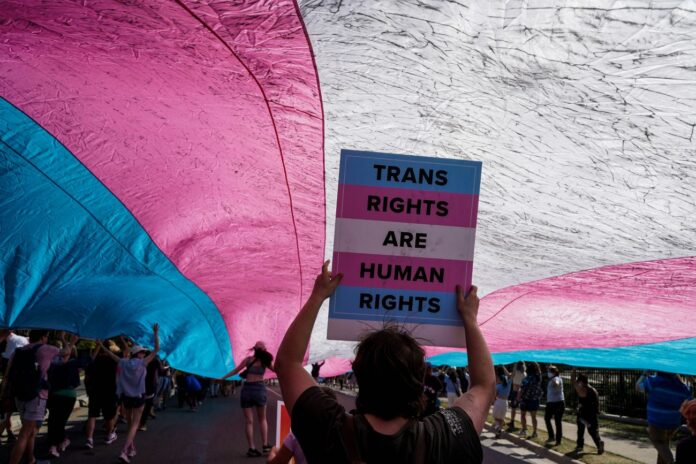
We see this in discussions about immigration, where violence against women is invoked to justify hostility towards migrants and asylum seekers. Increasingly, we see it in conversations about trans people in our own spaces, where safety concerns are used to argue for exclusion.
What troubles me is the assumption that safety can only be achieved by treating another marginalised group as a threat, rather than looking at the bigger picture. My own experience of violence, recovery and healing has convinced me that safety is built through support, accountability, compassion and community – not fear.
What survivors often recognise
Living through violence makes these conversations strangely familiar – not because they resemble support for survivors, but because they repeat the dynamics survivors encounter after disclosure. The doubt. The patronising comments. The assumption that trauma is linear.
I’ve been told that my support for trans-inclusive politics somehow contradicts my experience as a survivor – sometimes subtly, sometimes explicitly. The underlying message is always the same: that surviving violence should make us more fearful, more suspicious, natural candidates for supporting exclusion. I’ve never understood that assumption.
If anything, my experience taught me how easily fear is manipulated, and how vulnerable people can be turned into tokens. Questioning a survivor’s judgement because they support trans inclusion doesn’t empower them – it mirrors how survivors are treated when they don’t fit someone else’s idea of the “perfect victim”.
Trauma hasn’t narrowed my understanding of humanity. It’s deepened my empathy for those who are misunderstood or treated with suspicion.
Anti-trans politics misunderstands abuse services
Much of the debate around trans inclusion focuses on services like Rape Crisis, refuges and other survivor-facing organisations. As someone who has accessed those services, I’ve often felt the rhetoric doesn’t reflect reality.
People working in these services support trauma survivors every day – risk assessment and safeguarding are already core to that work. What surprised me about the debate was how disconnected it was from how these services actually operate. In one-to-one support, I never encountered other service users at all – appointment times are carefully managed, and sessions are structured around privacy. The service was designed around confidentiality, dignity and safety.
It’s also worth acknowledging what often goes unmentioned – that trans people are themselves disproportionately affected by violence and harassment and deserve the same access to support as anyone else. For me, what mattered most was having a space to speak openly about my own trauma – not scrutinising other traumatised people’s histories. That environment was central to my recovery.
How exclusionary spaces create unsafety
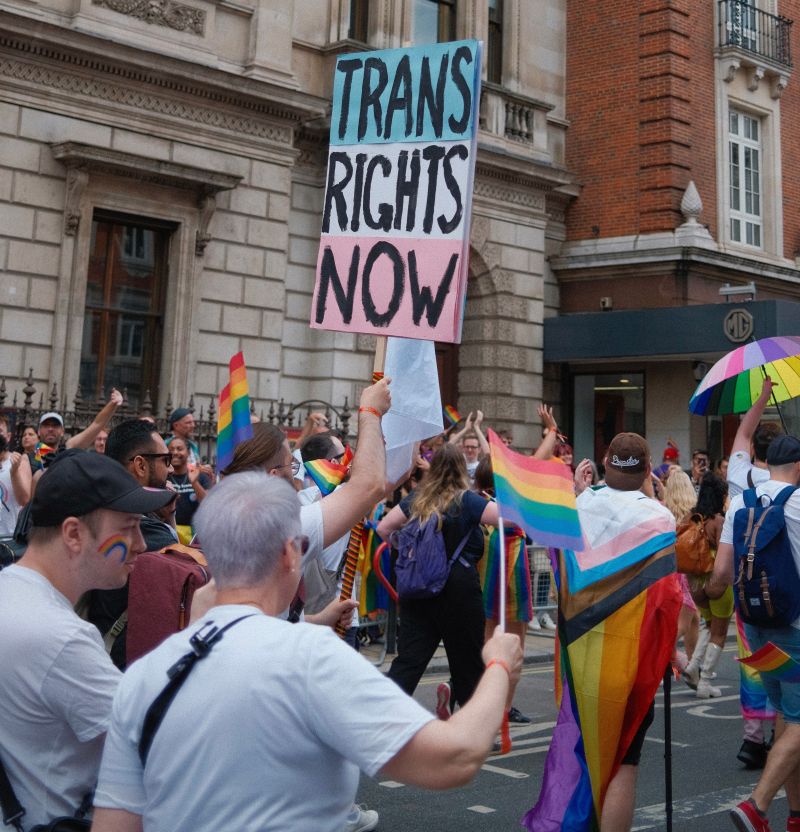
Safety isn’t about deciding who ‘belongs’. It’s built through trust, consent, accountability and mutual respect – through cultures where boundaries are understood. What concerns me about anti-trans spaces isn’t only who they exclude, but the atmosphere that exclusion creates –constant scrutiny of bodies, policing of appearance, narrow rules about who looks acceptable.
We know what it feels like to have our bodies examined and our behaviour scrutinised. That’s why I’m drawn to spaces built on dignity rather than suspicion. Genuine safety grows from respecting each other’s humanity, not from treating each other as threats.
Who is shaping these conversations?
Women’s safety is frequently invoked by people – mostly cis men – who show little interest in the conditions that put women at risk in the first place – funding for services, access to housing, crisis support, long-term recovery. These are what make a real difference. Yet public attention goes elsewhere.
Much of the debate over ‘what a woman is’ and who belongs where is shaped by people who hold significant power. If the goal is genuinely to support survivors, our energy should go into strengthening survivors’ voices and the systems that protect all of us.
What real allyship looks like
Survivors of violence and trans people aren’t on opposite sides of some larger struggle – we face the same struggles – misogyny, rigid gender expectations, institutional neglect. Trans liberation has never felt separate from feminist principles to me; it’s part of the same questions about bodily autonomy and freedom from discrimination.
Trauma taught me how isolating violence can be and how it undermined my relationships and my sense of self. That’s why I can’t support approaches built on isolating and excluding vulnerable groups instead of funding and supporting them. Real allyship means listening, responding to fear without letting it dictate our politics and recognising that dignity isn’t finite – you don’t have to take it from one group to give it to another.
Safety cannot be built on scapegoats
Survivors are weaponised in political culture wars again and again – our pain turned into talking points, our trauma used to justify fear campaigns against trans people. But survivors often understand violence more clearly than those who claim to speak for us. Danger isn’t defined by who shares a public space with you and it isn’t prevented by teaching people to fear each other.
Abusers don’t always look frightening and harm isn’t prevented by public paranoia. Supporting women’s safety doesn’t require targeting trans people. What I survived taught me the opposite lesson – that solidarity isn’t separate from safety; it’s part of it.
If our vision of justice can’t make room for the humanity of vulnerable people, it’s worth asking what kind of safety we’re actually trying to build.
Subscribe to our regular updates to receive the latest articles, analysis and news direct to your inbox at https://theleftlane.media/subscribe/