
How are Nigel Farage, the Daily Mail and GB News able to mislead people in post-industrial England to the extent that they will vote against their own interests? Why are those on the left not voting at all? A new report, Popular Radicalism in Post-Industrial England, published by the Common Wealth think tank following extensive research in 2025, addresses these questions and suggests ways that progressives can connect with voters.
The towns of Corby in Northamptonshire, Coalville in Leicestershire and Mansfield in Nottinghamshire were chosen as the focus for the report’s research on the basis that they had mining and manufacturing histories and are Reform leaning, as recent local election results show.
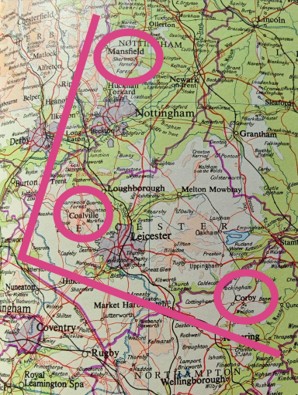
The Common Wealth study involved working with five focus groups, in-depth interviews with 15 residents and long-running research by people who immersed themselves in the communities they were studying. The resulting report identified three problem areas for the acceptance of progressive politics in these towns – scepticism, salience and structure.
In one of the Corby focus groups, an enthusiastic Reform voter and a left-wing non-voter found common ground in their shared sense that politics is corrupt. They said: “Politics at a local level, most people still have good intentions, I think as soon as you hit a national level, you have the party mandate. So, they don’t care about the people. Because, like I said, that – everyone – they get hit with that national corruption. The politicians at that level, they are bought and sold. They don’t care what people say, because the people ain’t funding them. [laughter] They care about the people that are giving them money.”
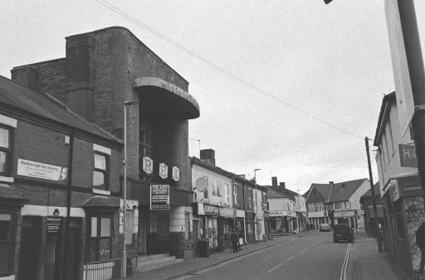
Corporation street Corby

Janet, a hairdresser in her 50s, had this to say: “I don’t trust [Reform] to deliver on it. They’re saying the right things, but who is going to sort this mess out? I can’t remember the last time I had two weeks off because that’s just too big a deficit. And if I’m poorly, I’ve got to be really poorly, because I just don’t get paid. And, so, it feels a little bit now like I’m on a hamster wheel. I can’t stop even if I wanted to stop basically. I’ve got to keep going.”
This highlights the position for many people. They are exhausted just making enough money to live. As Sinead said: “Does my vote even count? Everyone is so sceptical of shit. Unless I physically see it, I can’t really believe it”. Sometimes she feels the government is just a “puppet on a string. I am not just going to buy into a system that is completely fu**ing corrupt. I want to be as far away from it as possible at the minute.”
So, Sinead doesn’t generally vote. She voted Green at the last local election as a favour to a friend. “People aren’t paying their bills, and they aren’t buying essentials or luxuries because people aren’t going to earn enough,” she says. “In a cost-saving drive, one friend has started to ration how often he boils the kettle. [H]e boils it once in the morning and fills his flasks because he doesn’t want to boil the kettle seven, eight times a day. Just a way you can save,” says Sinead.
She would like to see rent controls and stronger eviction protections, having seen a pregnant friend get evicted two weeks before Christmas. She is in favour of bringing essential services back into public ownership.

So, what is the answer to ending corruption in politics? The Common Wealth report suggests a number of ways to achieve this.
- Announce a comprehensive anti-corruption bill to replace the toothless 2014 Lobbying Act.
- Ban MPs from taking on second jobs.
- Fix loopholes in lobbying legislation.
- Cancel inflation-busting pay rises for MPs and remove IPSA’s authority to determine MP salaries.
The Welsh Parliament has recently passed a law making it illegal for candidates to lie during Senedd elections. Enforcing this bill is going to be interesting which is probably why it will only come into force by 2030. However, these suggestions are only applying sticking plasters on a democracy that is in crisis. Westminster needs much more radical change. People are voting for Reform because they feel out of control. To quote Janet, a hairdresser in her 50s: “So, I just feel like we’re spiralling into a country of unknown really.”
If only there was a party brave enough to offer people real democracy
So, let’s give power to people in the form of local, regional and citizens’ assemblies whose decisions must be acted upon and funded by the government. As Sinead says: “Prove it to me – change this country!” If there was a party brave enough to start offering people real democracy, the power to get things changed both locally and nationally, I believe voters would jump at the chance to elect that party to power.
The report states that stories of young male immigrants shredding their passports so they can’t be traced and alleged sex crimes by black and brown men are circulating rapidly in the community. Participants in focus groups reported more racist incidents as far-right groups became involved in putting up flags and vigilante ‘public protection’ efforts.
While most of the interviewees and focus group participants held many progressive opinions, especially on employment, health and housing, these policy areas are not central to their political identities and party-political preferences. Most were unaware of the measures the government has taken on renters’ rights and employment rights, despite being strongly in favour of the policy content. The government trying to find ways to reduce immigration and the media reporting on it are exacerbating the problem.

And yet the report quotes a Corby man as saying: “If you do the same job as me, if you sweat the same sweat as me, you bleed the same as me, you know, I have got a mountain of respect for you.”
The preoccupation with immigration is generally among middle-aged and older voters. Younger voters socialise with non-white residents and this will become more common as the lower cost of housing in these areas attracts more non-white residents who have been sent to live there.
Janet had this to say: “Who are they? What are they bringing? They’re not doing anything. They’re just like leeches that are just feeding off us and I just think it’s very sad that we’ve kind of lost who Great Britain is. And by being, saying ‘Great Britain’, I don’t mean the white British. I don’t mean that, of anyone that’s British, any colour that is British, you know, there’s all sorts of religions and colours of people that are British. But we are losing Great Britain, I feel, the values that we hold are important.”
She goes further: “You know, I do appreciate, I mean some people talk about mosques being built and all the rest of it. Well, we all need a place to worship, I accept that, that’s not a problem. But I don’t accept that in Birmingham English is the fourth [most] spoken language. Sorry, you’re in bloody England.”
That last statement is simply untrue. In fact, 84.4% of people in Birmingham speak English as their main language. It’s just one example of the misinformation that gets spread on social media. However, Janet’s comments are indicative of a widely held view that British people are not necessarily white or Christian. And that if you are born here, you are British.
An inclusive vision of what it means to be British is needed
This is something we need to build on. The report suggests that we must work to establish an inclusive vision of what it means to be British and push back hard on right wingers who promote ethnonationalism. Ofcom must also act against media outlets that consistently spread racist misinformation. We need people to get out of their social media echo chambers where misinformation causes outrage and clicks.
The report found that many interviewees regarded the hardship and humiliation they experienced in the workplace as just a fact of life. One in-depth interview followed the life of a white man in his 40s living in Corby. Let’s call him Donny.
His work experience has been in the lower paid end of the employment market and he has experienced a lack of autonomy, management favouritism and unpredictable shift patterns. He had a job in a fruit processing plant where the managers would give their ‘favourites’ the easier shifts where they could earn good bonuses while the rest of the workforce only got the basic wage. Clearly unacceptable working practice, but the report found that the response is very often to move jobs rather than fight to change things for the better where you are.
In Donny’s case, he was working in transport and logistics when first his father and then his mother got dementia. He asked to go on the day shift so he could look after his father in the evenings. However, the system didn’t allow for agency workers to make demands about shifts and so he was soon back on nights.
He had no choice but to leave work and try to survive on a carers allowance. As his parents’ dementia worsened, he found less and less time for himself. In his own words: “It wasn’t too bad at the start, the first couple of years, three, four years […] I had a bit of freedom so I could go and do my bits and bobs. And then it got to the point where we couldn’t do anything.” When his parents eventually died, he was left with large utility debts and physical and mental health problems. “For the first year I literally just slept on the settee down here, never came out, I didn’t go upstairs [to my bedroom]. I didn’t do anything,” he said.
Given that he had been let down badly by the government in his caring role for his parents and the conditions he experienced in his places of work, you would have thought that his politics would have centred around social care and conditions of employment. Instead, his political priority is ending small-boat Channel crossings. “I mean most of the places they’re coming from, yeah, there might be a little bit of a war going on or something but it’s not as bad as what they make it out,” he said. The real motive, he believes, is access to benefits.
Reform have said that they will row back on the Employment Rights Act. This should be highlighted and waging a political fight over rights and conditions in the workplace would bring these much more important issues to people’s attention. As recommended by the report, a good start would be to include conditions at work as part of collective bargaining agreements negotiated by unions.
Another area is rent control. The people that do buy second properties and charge extortionate rent and stuff like that, that makes it even harder for us,” said one Coalville man in his 20s.
Another interviewee, Jessica, a woman from Coalville who works on a mental health ward, had this to say: “[Y]ou could have someone that has a learning disability and it could be mild, it could be severe. They could have several concurrent conditions and they’re going to get kicked out in either a month or two. But they’re not going to find a property to get out to. So that’s going to impact them significantly.”
Obviously, the answer to this is that everyone should have a decent and affordable home. The report gives three suggestions to achieve this aim.
- Give metro mayors the powers to introduce rent controls, as they have been requesting.
- Expand council housing building programmes through a new and more ambitious affordable homes programme.
- Expand retrofitting schemes for social housing to insulate homes, to combat high energy bills, damp and mould.
If we had a written constitution that guaranteed people housing, then the government would be compelled to both build and buy as many houses and flats as were necessary. No one should be homeless. Mental health must be much better funded. Look at Donny’s story where he couldn’t even sleep upstairs in his own bed for a year.
And to those that say we can’t afford this – nonsense. The UK government has a fiat currency; it prints its own money. Therefore, spending into the country, building infrastructure, housing and medical facilities is creating assets, not debt.
In conclusion, progressives have to take the focus off immigration and onto the real reasons that people in post-industrial towns are experiencing hardship. These include a lack of affordable houses, lack of good jobs, humiliation, low pay and lack of autonomy at work and shift patterns which do not take personal circumstances into account.
Other reasons include the appalling state of social care where people are not supported in their caring responsibilities and given a pittance to live on. The lack of democracy in our parliamentary system is also an issue. These are the issues that must be reported on and discussed on doorsteps by activists willing to listen to the concerns of voters.
Click here to download the Common Wealth report, Popular Radicalism in Post-Industrial England.