Gig ticket prices have surged by 212% since 2000 – a phenomenon termed “gigflation” – with the average UK ticket now exceeding £128. Driven by ‘dynamic’ surge pricing and corporate consolidation, live music has become increasingly unaffordable for many fans. A recent survey found that 71% of concertgoers have thought twice about seeing artists live because of rising costs. The government has faced calls to act and recent reviews commissioned by the culture, media and sport select committee have urged ministers to ban the resale of tickets above face value and crack down on dynamic pricing.
Speaking to The Left Lane, Trevor Williams, a regular gig-goer from Teesside, said there were concerts he simply hadn’t gone to because of fees stacked on top of face value – sometimes 20% or more. “I recall gigs by The Stray Cats and The Damned where I didn’t buy tickets because of the high amount of fees,” he said.
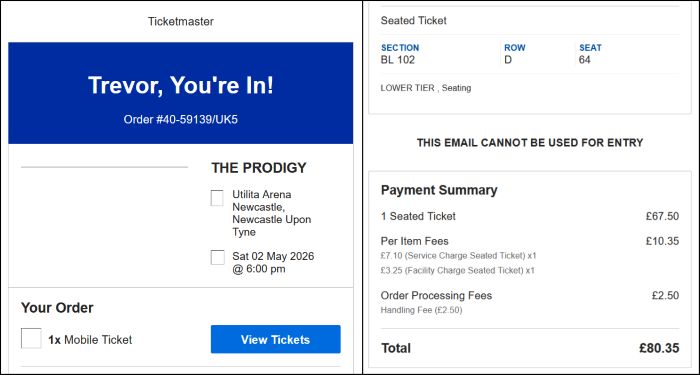
Ticketmaster, he said, had a particularly bad reputation. “Tickets are advertised at face value, when in reality they’re going to be far more expensive than that. The mark-up by adding fees later in the booking process makes me feel they can add whatever they like, because those fees are not transparent.” He accepts a booking fee is reasonable in principle – “I appreciate they need to make an operating profit, say a generally accepted industry standard booking fee of no more than a 10% addition to the face value of a ticket,” – but questions a system where charges routinely run far higher, plus a ‘handling fee’ for what’s essentially an automated email. When he bought a ticket to see The Prodigy in Newcastle recently, fees added around 19% to the price. “It’s a rip-off,” he said.
Ticketmaster merged with concert promoters Live Nation in 2010 to form Live Nation Entertainment, now the biggest ticket seller in the world. It’s used by 60% of event ticket buyers in the UK and controls more than 70% of the US market, with an even greater share of the arena and stadium market. In 2024, Live Nation generated a record $23.2bn (£17.5bn) in revenue, with Ticketmaster selling 637 million tickets.
The numbers behind UK festival pricing tell the same story. BBC News analysis earlier this year found entry costs to major festivals have risen well above inflation over the past decade. A Reading and Leeds festival ticket cost £145 in 2007 – about £245 today after inflation – yet in 2025 entry was £325, some £80 above the inflation-adjusted figure. Parklife tickets have risen by around 71% in real terms since 2013. Glastonbury saw the biggest cash increase, up about £85 (30%), Download rose 26% over the same period, with Reading and Leeds the relative outlier at 14%.

Bands, fans and venues are being fleeced
“They are fleecing the bands, the fans and the venues of a lot of money,” Williams says. “They might bleat on about heavily investing in the industry, but all I see is a website which must cost a tiny fraction of the fees they receive to run.”
Most bands see little of this money. “Many make very little profit, if any, from ticket sales and rely on merchandise to keep going,” Williams says – and even merchandise isn’t safe, with some venues taking a cut of sales. “I remember one band telling fans to meet them in a pub before a gig for merchandise, because the venue they were playing was going to fleece them.”
The upshot, in Williams’s view, is that too much money is lost to fees that never reach the grassroots venues that fans like him love – “unless artists such as Sam Fender insist on £1 from every ticket going to the Music Venues Trust”. He’s increasingly choosing not to see certain bands as prices climb. “It irks me considerably that Live Nation, Ticketmaster and the like are creaming off money they shouldn’t be. The industry needs to be properly regulated to create a fair, open marketplace, which simply doesn’t exist at the moment.”

Ticketmaster’s resale racket – and the fairer alternative fans deserve
Resale sites let fans buy and sell tickets after the original sale closes – but the rules a platform sets for that resale determine whether it protects fans or feeds off them. Ticketmaster’s UK history here is instructive. Its old resale sites, Get Me In! and Seatwave, became a haven for touts’ bulk-buying and reselling at huge mark-ups – at one point listing Britney Spears tickets 329% above face value. Ticketmaster only shut them down in 2018 after sustained pressure from the Competition and Markets Authority, replacing them with a capped exchange.
But the underlying incentive hasn’t gone away. A US Senate report this year found Ticketmaster’s internal documents treat resale integrated into its own platform as a growth engine – deliberately shrinking the gap between a ticket going on sale and reappearing on resale from days to minutes, with one tour’s ‘record’ onsale driven by average resale prices of $795 a ticket. Twickets, by contrast, has only ever allowed resale at or below face value – a structural choice that removes the incentive to profit from scarcity in the first place, rather than a regulatory afterthought.
Grassroots venues generate real cultural, social and economic value
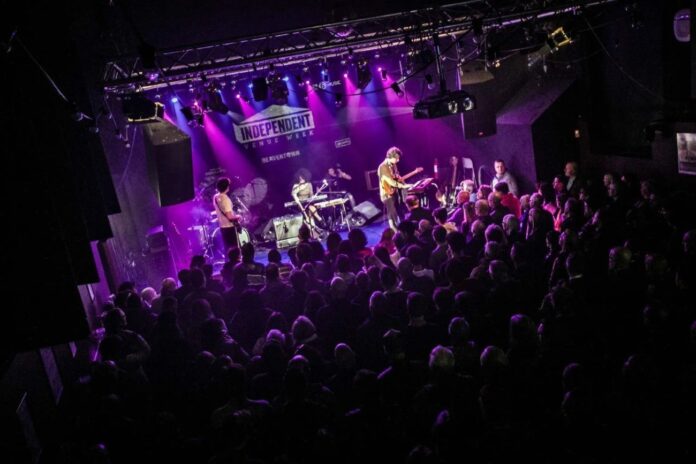
The Music Venue Trust (MVT), the charity Williams credits with channelling some money back to grassroots venues, works to protect and improve UK grassroots venues for the benefit of communities and emerging artists. Grassroots music venues (GMVs) are effectively the R&D department of the UK’s £5.2bn-a-year music industry, investing over £160m a year into developing new talent, on stage and behind the scenes.
“We operate from the point of view that all places that put on live music are important. It doesn’t matter what kind of music,” says Mark Davyd, CEO of the MVT. “Our specific angle looks at how we can support the careers of artists that function best as what we might call ‘outsider art’ … For the most part, our remit is to consider how we can nurture and develop new talent. Any venue that plays a role in that, or in supporting more alternative art forms, is a key part of the network we try to support.”
The MVT also set up the Music Venues Alliance, a UK-wide association of grassroots venues. Locally, Teesside’s Georgian Theatre and The Green Room in Stockton are run by Tees Music Alliance (TMA) on behalf of Stockton Council. “We aim to play our part in building a thriving live music scene in Teesside – underpinned with a strong sense of social responsibility,” TMA says. “Much of what we do helps develop our local music infrastructure – artists, songwriters, musicians, promoters, other venues, event organisers, record labels, producers – in recognition that we are all part of a wider community.”
Organisations like the MVT, the MVA and TMA are doing vital work supporting a sector that brings pleasure to so many people. Meanwhile, multinational ticketing players like Live Nation and Ticketmaster continue fleecing fans desperate to see the bands they love.
“Even when you go and see a big name at a medium-sized venue like Newcastle City Hall, the artist will likely only receive a small fraction of what you’ve paid,” Williams says. “You can write off somewhere between 19-25% as money paid to the ticket agency and the cost of food and drink will be eye-watering too – something grassroots venues keep reasonable, but larger venues, arenas and festivals don’t.”
Fans, he argues, are paying vastly overinflated prices for large-scale gigs while money fails to filter down to the grassroots venues where superstars first start out. “With the demise of the grassroots venues, fewer acts will come through, ultimately meaning fewer larger gigs and festivals because there won’t be anyone to fill the stage. The Rolling Stones, The Who and Elvis Costello won’t be around forever – but the likes of Live Nation don’t see it that way while they’re happy just creaming the crop and ripping off fans.”
Subscribe to our regular updates to receive the latest articles, analysis and news direct to your inbox at https://theleftlane.media/subscribe/