
Trump’s war on Palestinian activism reaches Spain
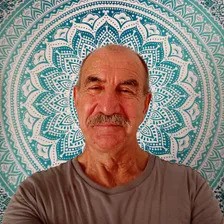
On 10 July, Spanish police arrested James Cox “Fergie” Chambers Jr. in Ibiza, following a US extradition request alleging money laundering, although the specific charges have not been made public. Post-arrest, Chambers was transferred to a maximum security prison in Madrid ahead of review of the extradition order by a Spanish court. Chambers, who identifies as a communist and founded a self-described Marxist-Leninist collective in Massachusetts run by a group called the ‘Berkshire Communists’, is a fascinating figure. The 40-year-old son of James Cox Chambers, who controls Cox Enterprises, a US media conglomerate, Fergie Chambers divested from the business in 2023, reportedly receiving $250m, which he then used to fund various causes via the Babochki Collective which he founded. One such cause is the Zaynab Project, which provides mental health and psychosocial support for orphaned children in Gaza. Writing for the Irish Times Rachel Levin provides more background to the case and the reaction to it.
US renews hostilities against Iran
When Donald Trump signed the memorandum of understanding (MoU) intended to end hostilities between the US and Iran he said of the Iranian leadership: “We’re dealing with people that I think are very rational people, and they were nice to deal with”. Fast forward to the NATO summit in Ankara on 8 July 8, Trump petulantly remarked: “I don’t want to deal with them anymore. They’re scum. You know what scum is? They’re scum. They’re sick people. They’re led by sick people.” Against a background of renewed military hostilities between Iran and the US, Trita Parsi writing for Responsible Statecraft explains that the fundamentals have not changed, with Iran retaining its strategic advantages including control of the Strait of Hormuz, whilst Trump is running out of political time at home.
Inside the First World Symposium Against Anti-Zionism
Theodor Herzl founded the political doctrine of Zionism in Austria in 1896 and convened the first Zionist Congress in Basel, Switzerland in 1897. This initial meeting evolved, to become the World Zionist Congress, which held its 39th meeting in Jerusalem in October 2025. Zionism as envisaged by Herzl is an expression of Jewish self-determination. However, many people, including those in the wider Jewish community outside Israel, argue that Zionism is an aberration of Jewish self-determination, being simply a racist white supremacist movement. There has been a groundswell of such anti-Zionist sentiment, given Israeli treatment of Palestinians, not least since the genocide in Gaza. Zionists routinely challenge such views as antisemitic and it was perhaps only a matter of time before they formalised their opposition in the form of the first Symposium Against Anti-Zionism held in Ontario on 17 May. In an article for Mondoweiss Shir Pasternak, associate professor of criminology at Toronto Metropolitan University and a member of the steering committee of the Jewish Faculty Network, gives an account of proceedings.
Rubio’s Ministerial on the Resurgence of Political Terrorism
On 17 July, representatives from 65 countries drawn from Latin America, Europe and South East Asia convened in Washington at the invitation of the US secretary of state Marco Rubio. The purpose of the summit, the Ministerial on the Resurgence of Political Terrorism, was to urge delegates to fight what was characterised as “far-left terrorism”. The political initiative is seen by some observers as a response to the disquiet of the Trump administration about the election of Zohran Mandami as New York mayor, as well as an attempt to sharpen the ideological image of the administration ahead of November’s mid-term elections. In a critical analysis based on documents leaked to him ahead of the summit, the US journalist Ken Klippenstein outlines the State Department’s talking points for the summit, and the individuals involved in its organisation.
The Swiss say no to racism
Switzerland, often associated with the legendary William Tell, cuckoo clocks and skiing, is a small country of just under 16,000 square miles with a population of nine million people. The country does not come to public attention much politically, in part due to its foreign policy of neutrality since the 1815 Treaty of Paris. The Swiss parliament, or federal assembly, has 246 seats shared between ten parties and the two principal parties are the right-wing populist Swiss People’s Party, with 46 seats, and the Social Democratic or Swiss Socialist Party with 41 seats. In February 2024, the Swiss People’s Party announced that they had enough support to bring forward legislation called the ‘Sustainability Initiative’ which would have capped immigration at ten million. The proposal was rejected via a referendum on 14 June 2026. Roland Erne writing for Social Europe explains how the xenophobic legislative initiative was defeated.
Europe’s Industrial Accelerator Act
By common consent of most informed commentators, the EU trading bloc has been in industrial and economic decline. In a speech to policy makers at the European Banking Congress in Frankfurt at the end of last year, Christine Lagarde, European Bank president, complained about an outdated EU economic growth model, a decline in manufacturing, and a fall in domestic demand as a percentage of overall EU GDP. The EU’s response to this ongoing malaise is the 2026 Industrial Accelerator Act (IAA). The act proposes boosting industrial competitiveness and decarbonisation by setting a 20% manufacturing GDP target by 2035 and prioritising EU made and low carbon products in public procurements and investments. The IAA would seem to be an attempt to address the problems outlined by Lagarde and other economists, however as Ludovic Voet, general secretary of the European Trade Union Confederation, writing for Social Europe explains, detractors of the initiative say it is too interventionist and are suggesting a return to the kind of laissez-faire economic policies which he argues have brought the EU to its current economic condition.
Subscribe to our regular updates to receive the latest articles, analysis and news direct to your inbox at https://theleftlane.media/subscribe/