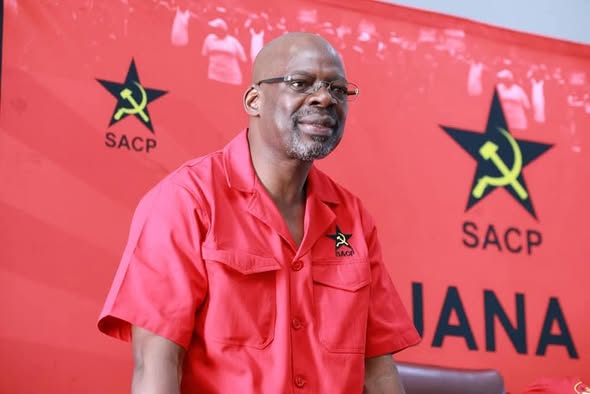
The African National Congress (ANC) and its long-standing ally, the South African Communist Party (SACP), appear to be heading towards a final rupture after the SACP resolved to contest the upcoming municipal elections independently. For decades, the SACP has campaigned on behalf of the ANC, with its members standing as ANC candidates. In return, a few of its senior leaders were rewarded with cabinet posts. The ANC has now responded to the SACP’s decision with an ultimatum forcing dual members to choose a side, ending a longstanding arrangement that allowed overlapping membership.
In the forthcoming elections, the two parties will compete directly. This is a historic shift. The alliance dates back to the 1950s and the SACP played a major ideological role in the liberation struggle. In line with the Soviet Communist Party’s formulation, it supported the concept of a national democratic revolution led by the ANC.
After 1994, the ANC introduced important reforms but soon adopted more orthodox economic policies – fiscal restraint, inflation targeting, and market-friendly frameworks. Since then, the relationship has been marked by recurring SACP criticism of ‘neoliberal drift’ and frustration at being sidelined within the alliance. At times, its position has resembled that of a permanently aggrieved junior partner.
The politics behind the split
There are two main reasons behind the SACP’s decision to go it alone. First, the ANC’s long-term decline. Electoral support has fallen sharply, while corruption scandals have become endemic. The manipulation of public tenders and the use of state resources for patronage have become embedded features of the party. At local level, this has translated into collapsing services, especially in water provision. The ANC’s policy of cadre deployment – placing loyalists rather than qualified officials in key positions – has worsened the situation.
Second, and more decisive, is the post-2024 political settlement. For the first time since 1994, the ANC lost its parliamentary majority and formed a government of national unity, bringing several parties into the government. Most significant of these is the Democratic Alliance (DA). The DA, with roots in the white parliamentary opposition under apartheid, represents a firmly pro-market political tradition. The DA has its roots in the all-white apartheid parliament and had historic links to Anglo-American, the largest domestic representative of South African capital. Its economic policies are firmly pro-market.
The SACP opposed this direction and argued for a minority ANC government. This was ignored, reinforcing the party’s long-standing grievances. In early 2025, the SACP formally resolved to contest elections independently. A year of inconclusive negotiations followed.
The ultimatum
The turning point came with the ANC’s directive that dual members must declare, in writing, which party they will campaign for. Secretary-general Fikile Mbalula said that although dual party membership was allowed, failure to comply with the new electioneering rule could result in disciplinary action or removal from positions of authority. The ANC position is that you cannot “serve two bosses”.
The SACP’s response, led by its general secretary Solly Mapaila, was a rejection of the ultimatum as coercive and insistence that the dispute is political, not procedural. Members were instructed not to act individually under pressure, but to follow collective party processes. Mapaila reiterated the party’s justification – the crisis in local government, rising corruption, neoliberal policy drift and a weakening connection between the liberation movement and the working class. Although the two parties insist that the alliance is still intact, in practice they are preparing for direct electoral competition.
A lonely place for the SACP
The elections will sharpen existing divisions. Although the ANC’s electoral support continues to decline, it dependence on the SACP is probably slight. For over a century, the SACP has found comfort in its alliances with first the Soviet Union and its many allies and then with the ANC.
Most of the party’s prominent leaders with dual membership will choose to go with the ANC. The party has not built any significant independent base in the unions, relying on its partner COSATU for working class organisation. It also faces hostility from the more progressive South African Federation of Trade Unions because of its ANC links.
The broader left vacuum
This split exposes a wider problem. South African politics ought to provide space for a credible left alternative, yet none has emerged. The Economic Freedom Fighters and the MK Party are often described as left wing, but both are dominated by authoritarian leadership and patronage politics. The metal workers’ trade union NUMSA’s attempt to launch a workers’ party in 2018 collapsed into irrelevance.
The SACP’s early moves as an independent force do not inspire confidence. It is planning a “Conference of the Left”, bringing together a disparate mix of parties united mainly by opposition to the ANC and rhetorical attacks on neoliberalism. This is not a coherent political project.
A decisive moment
The ANC–SACP split marks a decisive moment. The ANC is trying to contain electoral damage and enforce discipline as its support declines. The SACP is attempting, belatedly, to establish an independent political role grounded in working-class representation. But the balance of forces is uneven. The ANC is likely to remain dominant, while the SACP faces an uphill struggle to become electorally relevant.
The alliance is not yet formally dead – but as a unified political force, it already belongs to the past. South Africa still lacks a credible, independent left alternative. This rupture may create space for one – but it will not emerge automatically.