
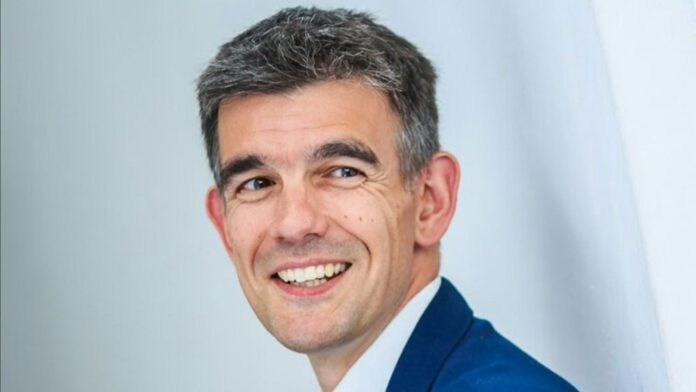
Matt Brittin is due to take up his post of director general of the BBC this week on 18 May 2026. What used to be a desirable top job in the media has in recent decades become fraught with peril.
It all started to go wrong with Alasdair Milne who was DG from 1982 to January 1987 when he was ordered to resign by the chair of the board of governors, Marmaduke Hussey and a former Times director under Rupert Murdoch. Milne went in the wake of sustained attacks from the Tories and particularly Murdoch’s The Times. The next victim was Greg Dyke, forced out in January 2004 in the wake of a savagely hostile Hutton Report, which strongly criticised the BBC.
George Entwistle lasted 55 days, resigning on 10 November 2012 in the wake of the Newsnight child abuse broadcast which wrongly implicated Lord McAlpine. And, most recently, as a result of a leaked internal memo published in the Daily Telegraph, Tim Davie resigned on 2 April 2026 over the editing of Donald Trump’s speech in a Panorama documentary. During his time as DG, he also had to deal with criticism over the Bob Vylan concert at Glastonbury, the Huw Edwards scandal and allegations of misconduct at MasterChef.
Matt Brittin will take up his post as a number of pressing existing problems crowd in on him. Last month BBC staff were informed that across the BBC, as a result of a £600m cost-cutting plan, 10% of the corporation’s 21,500 staff will be affected. A Guardian report revealed that news would bear the brunt of the job losses.
This is one result of the BBC’s income having been cut by just under 40% since 2010. Add to this the fact that the income from the licence fee is also falling due to licence fee evasion or households declaring they do not need a licence. This represents an estimated £1bn in lost income in 2024-25, £550m from evasion and £617m from households opting out. The campaign to defund the BBC has had its impact.
The British press, most of which is hostile to the BBC, is ready to weaponise the BBC’s mistakes, most notably recently the Telegraph coverage of the leaked internal memo which created a media storm leading to the resignations of DG Tim Davie and head of news Deborah Furness.
Which brings us to the 18th BBC director general, Matt Brittin, the first appointment to the job who was never a journalist or programme maker. He was formerly the head of Google for Europe, the Middle East and Africa. Presumably the thinking behind his appointment is that he will be able to shift the BBC into the new online media world.
His in-tray has some urgent problems which need tackling. The thinking behind a new book edited by the industrious John Mair, Letters to Matt Brittin: The New BBC Director-General, was to gather together a range of journalists, media academics and commentators and invite them to offer advice to the BBC’s new man at the top.
The result is a mixed bag. Some of the letters of advice, I think, he would be wise to quickly put in his waste bin. Like the advice from Robin Aitkin, a former BBC news correspondent on Today, The World Tonight and Breakfast News, who went on to write The Noble Liar: How and Why the BBC Distorts the News to Promote a Liberal Agenda and now writes columns for the Daily Telegraph. Aitkin rehashes his own hostility to the BBC’s liberal bias: “Unless you acknowledge that the BBC has an inbuilt bias towards the liberal-left no progress is possible,” he moans.
Some advice is worthy and sensible. A section ‘Grassroots’ has three contributions on the importance of sustaining local BBC programming because it provides vital local news services in areas where local newspapers have disappeared and people are turning to social media, which is devoid of factchecking, to get local news.
And some letters stand out because they draw on the rich experience of their writers. One is Richard Tait, now Professor of Journalism at Cardiff University but previously editor of Newsnight, editor of Channel 4 News and editor-in-chief of ITN. One focus of his advice is on misinformation and disinformation. He cites the example in the attack on the Minab girl’s school in Iran, which we covered in the recent issue of MediaNorth. He argues that the BBC will not be able to fulfil its crucial role “in combating misinformation and disinformation at home and abroad without committing the significant resources needed to make it happen”.
He also cites the experience of a previous DG, Mark Thompson, who handed over the day-to-day, high-level management of the news, current affairs and other risky programmes to his deputy, Mark Byford and urges Matt Brittin “to find his own Mark Byford”.
The media commentator Raymond Snoddy also has a strong letter of advice highlighting criticisms of how the BBC has covered Nigel Farage and Reform UK. “The allegation is that not just on Question Time but across BBC news coverage, Reform UK is afforded undue prominence given it has little more than a handful of MPs, half of whom were elected as Tories,” says Snoddy.
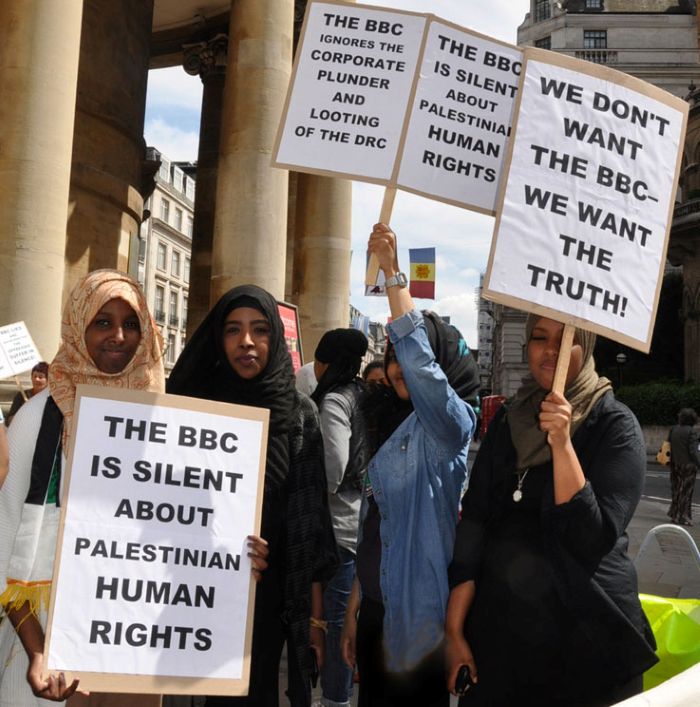
He also points out that “there is a fear that the BBC has been weak and over-cautious in the face of the powerful pro-Israel lobby. The clearest evidence came from how the documentary Gaza: Doctors Under Attack was made and treated by BBC executives,” he says. The documentary was shelved by the BBC citing fears it would breach impartiality rules. It was later shown on Channel 4 without noticeable problems. Snoddy argues that “there is a need to be a reset on the strategy and purpose of BBC journalism”.
If Matt Brittin wants the advice offered in the best letters in this book, he could save time and delegate someone to go through it and select the ones that have some real substance to help him to sort out his priorities.
Letters to Matt Britttin: The New BBC Director-General, edited by John Mair and Andrew Beck, is published by Bite-Sized Books. Click here to order.
Subscribe to our regular updates to receive the latest articles, analysis and news direct to your inbox at https://theleftlane.media/subscribe/