Admittedly, the specially commissioned article below may be of more interest to electoral reform geeks than the typical reader of The Left Lane. Written by Klavs Henriksen, who now lives in the UK and knows the robust Danish proportional representation (PR) voting system from the inside, the article exposes two seldom-highlighted features of byelections in the UK under our archaic first-past-the-post system (FPTP). Firstly, that they are highly unrepresentative and second, that most votes effectively don’t count in practice.
Both of those serious failings of FPTP were more than obvious in the 2024 general election. Then, only a third of UK voters choose Starmer and Labour at the ballot box and yet Labour won two-thirds of the seats in parliament. We are now watching a repeat.
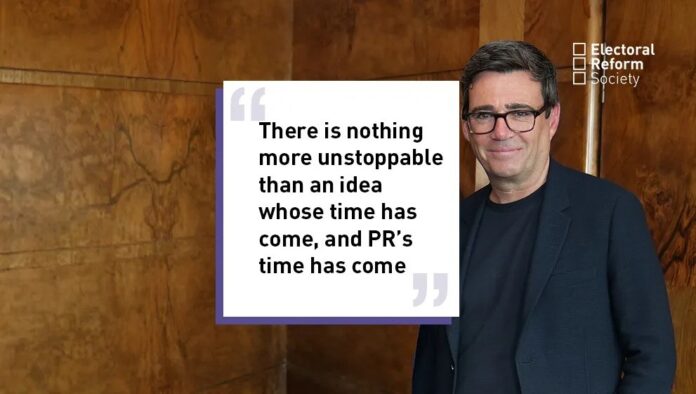
Both features – unrepresentativeness in spades and ignoring the choices of many voters – are on full display again in the rapid ascent (to put it mildly!) of Greater Manchester mayor Andy Burnham. In just over a month, Burnham is expected to move from being a successful byelection candidate in the Makerfield constituency to being head of the Labour Party and the next occupant of Number 10 Downing Street – and easing out the current occupant in the process. It almost takes your breath away.
So, if you care about the state of politics in the UK and who runs the country, Klavs Henriksen’s piece below is well worth a read by all our readers.
What the heck has just happened?
If Starmer was not so unpopular both in his own party and the country, surely more people would be asking – what the heck has just happened to the government? How do fewer than 25,000 voters in Makerfield get to choose the prime minister of a country of 69 million people?
Certainly, few are questioning the process. Political commentator Jon Sopel of The News Agents called Burnham’s political assault on Starmer “bold and brilliant”. Last week, New Statesman ran a cover of a mock medieval tapestry that featured Burham on a stallion and Starmer getting an arrow in the eye. The drawing was labelled “Northern Conquest”. This is politics as a World Cup tournament.
On the one hand, what Burnham is pulling off is not illegal. Byelections are relatively common events under a FPTP voting system, though few have been quite as consequential to Labour insiders and operatives who see their “moment” and, of course, not to be mourned, to Keir Starmer as well. The rest of us, more than 68 million citizens lest we forget, have been passive spectators as to who will likely be running our country. It is top-downism and electoral dictatorship writ large.
As for Starmer, “Vic, what just happened to me?” he may well be asking his wife. Not “chaos”, as he predicted, but The Illusion of Rupture as one lefty titled his Substack.
Burnham is gaming the system
On the other hand, what Burnham – who calls himself a strong proponent of PR – has done is to take questionable advantage of a seriously undemocratic and inherent flaw in FPTP voting systems, namely byelections and their highly unrepresentative character. Indeed, it is not too harsh to say Burnham is gaming the system.
For what else is it when you get a 33-year-old MP (Josh Simons) in your home town, who was first elected in only 2024, to stand down for you personally in a constituency regarded as one party’s (Labour’s) private property. Then, you become within a few days the uncontested Labour candidate in the ensuing byelection and, upon winning, you become not only the uncontested leader of the current governing party, (a post you have failed to win twice before over the past 16 years) but also the UK’s prime minister – and still with potentially three years to run after a mere 34% voted for your predecessor?
Let’s call it what it is, a bloodless coup. And not exactly a shining example of even bourgeois democracy. Is it any wonder so many people in this country are cynical about our politics and our political system?
As an antidote this madness, consider the following article which explains how they do things rather differently in Denmark’s PR voting system. For those who say that no change is necessary in the UK, it should be little consolation to know that Belarus is the only other country in Europe to use a FPTP voting system.

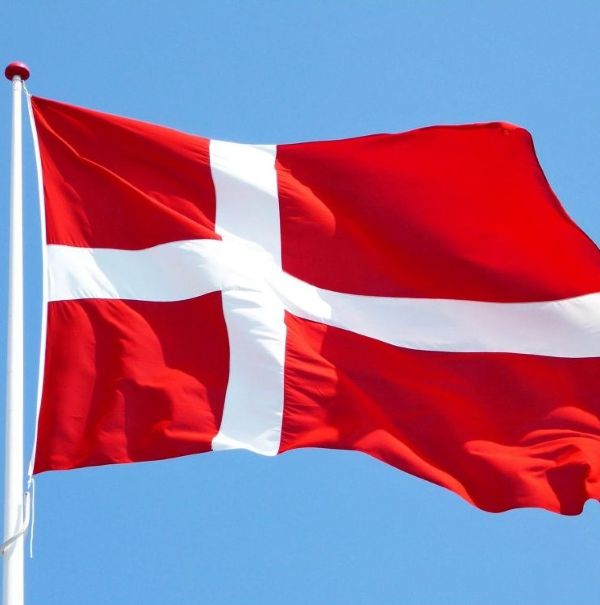
Britain holds a by-election, while Denmark simply seats the runner-up. The Danish way is quieter, cheaper and more faithful to wishes of all electors. Britain’s mid-term ritual is largely theatre and hype.
In the past couple of weeks, we have seen the familiar ritual of a byelection fold out across the United Kingdom. In Aberdeen South, Arbroath and Broughty Ferry and last, but not least Makerfield, voters were asked to elect a new MP. In the UK the death, resignation or disqualification of an MP triggers a familiar ritual – a byelection. Campaign buses roll into a single constituency, the national parties pour in resources and the result is dissected for days as a verdict on the current government.
Denmark never does any of this. When a member of the Folketing, our Parliament, leaves mid-term, the seat is filled within days, quietly and without a single voter returning to the polls. Far from a democratic gap, this is a deliberate feature of how Danish democracy is built and there is a strong case that it is the better design.
How the seats get filled
The reason Denmark has no byelections lies in its electoral system. The Folketing’s 175 Danish seats are allocated by an (open) party-list proportional representation, a system whose basic design has been in place since 1920.
Voters do not elect a single person to ‘own’ a geographic seat in the way a UK MP holds a constituency. Instead, each party wins a share of seats roughly matching its share of the vote and those seats are filled by that party’s candidates. Independent candidates can stand and get elected, but this is extremely rare.
When a member leaves through death, resignation, illness or appointment elsewhere, the seat does not fall empty. Nor does it not change hands between parties. Instead, it passes to a substitute (stedfortræder), the first unelected candidate from the same party, in the same constituency, who polled the most personal votes at the last election.
In short, the seat goes to the party’s strongest runner-up who is someone who already stood before these same voters and who very nearly won a seat on their own merits. In the case that it is an independent MP who is elected, the seat stands vacant until the next election. The effect is that the chamber the electorate chose at the general election stays intact between elections. The party balance does not drift and representation is never interrupted.
Why this is a good thing
It protects the result voters actually chose. A general election under proportional representation produces a parliament that more or less mirrors the national vote. A FPTP by-election, by contrast, allows a single low-turnout contest to transfer a seat from one party to another, nudging the overall balance away from what the electorate decided. The Danish substitute system preserves the proportional result voters delivered, rather than letting it erode seat-by-seat through scattered special elections.
It removes the distortions of byelection politics. Byelections in single-member systems, such as in the UK, are notorious for a low and unrepresentative turnout, protest voting and saturation campaigning in which one seat becomes a national proxy battle far out of proportion to its real weight. Makerfield was somewhat like that. Other UK byelections, such as nearby Gorton and Denton, have been even more so. The outcome often reflects mid-term mood more than settled opinion.
Denmark simply never generates these artificial flashpoints. The latest example is Burnham who got elected to become PM, even though Labour voters in 649 constituencies didn’t know that he would become Labour PM when they cast their vote back in 2024.
It is continuous and cheap. There is no period during which an area goes unrepresented, no administrative machinery needs to be mobilised and no public money is spent running an off-cycle election. The replacement is essentially immediate.
It reduces gamesmanship. Where byelections exist, the timing of a resignation can become a tactical weapon. Removing the mechanism removes the temptation.
Underlying all of this is a coherent democratic philosophy. In Denmark you typically vote first for a party and a programme and only secondarily for a particular individual. If the mandate belongs principally to the party, it is logical that the party, through the next candidate of its own voters, should keep the seat.
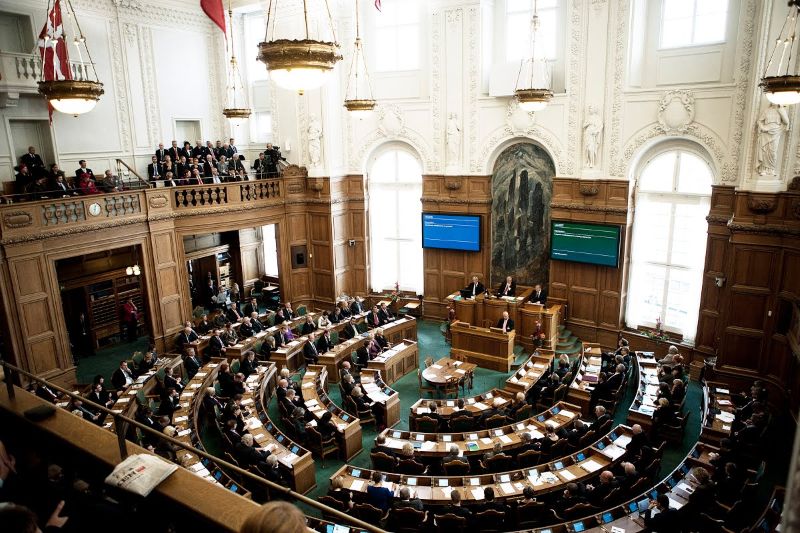
The counter-case and why it frays
The strongest defence of byelections deserves stating plainly. They let voters pass judgment on the government between general elections and they renew a fresh, personal mandate for a named local representative. This is something a substitute, however well-supported at the last election, does not carry. Denmark has neither feature and a fair account should not pretend otherwise.
But in the British case, the first and weightier of these, the mid-term accountability signal, is far weaker than it looks. The reason is instructive. A byelection fills one seat out of 650. Mathematically, it’s close to trivial. It almost never alters the government’s working majority in any decision-relevant way. Yet it is read as a national referendum and its swing is dissected as a verdict on the country’s overall direction. The gap, between how little turns on the seat and how much is claimed from it, is precisely where the accountability story frays.
It frays further because a byelection is a poor instrument for reading national opinion even on its own terms. Turnout runs characteristically well below the preceding general election. Makerfield is highly unrepresentative given the increased turnout because it is highly unusual for a byelection to draw more voters than the seat saw at the last general election.
So, the electorate that appears is self-selected toward the motivated and the discontented. The contests show the classic features of what some scholars have termed “second-order elections”. With no government on the line, voters are freer to stay home, to vote expressively and to punish the incumbent or reward protest and peripheral parties in ways they would not when power itself is at stake.
Byelection swings are, accordingly, far larger and more volatile than anything seen at a general election. This makes any single result a noisy and systematically anti-government estimator of the national mood. And because byelections are triggered by deaths, resignations and scandals rather than sampled at neutral intervals, a misconduct-prompted contest can depress the incumbent vote for reasons totally unrelated to the government’s record, even as the swing is nationalised all the same.
None of this makes the signal worthless and an honest reckoning concedes as much. A noisy indicator is still an indicator. Byelections occasionally do presage the following general election and act as a pressure valve for public frustration and they renew a real local mandate.
Byelections are poor instruments
But the Danish system’s defender can fairly answer that Britain is extracting a national verdict from an instrument poorly built to deliver one and also paying for it in money, disruption and over-interpretation.
The deeper point is that Denmark does not, in fact, forgo mid-term accountability. But that is no reason to manufacture a noisy proxy for it. Accountability there runs through frequent general elections and between them, through the standing discipline of (typically) minority governments.
A Danish cabinet must assemble a majority for each significant measure, bargaining with parties outside it, rather than being judged episodically by a single one over-read constituency. The accountability is continuous rather than theatrical.
This is the quiet logic of the Danish approach. It treats a member’s departure as an administrative event to be managed smoothly, not a mini-election to be fought. And it gives up far less in doing so than the drama of a British byelection night would have you believe.
Klavs Henriksen is Danish and has a MSc in political science. Klavs now lives in the UK and was a moderator in the campaign group GET PR DONE!
Some facts about the Danish electoral system
Denmark has a single-chamber parliament, the Folketing, with 179 seats. 175 of these are elected in Denmark and two each from the Faroe Islands and Greenland. Members are chosen by party-list proportional representation, broadly unchanged since 1920, so each party wins seats in close proportion to its national vote. Click here for the results of the March 2026 Danish election.
Of the 175 Danish seats, 135 are won directly in ten multi-member constituencies using the d’Hondt method. A further 40 national ‘levelling’ seats top each party up to its proportional share and iron out any remaining disproportionality. A party normally needs 2% of the national vote, or a single constituency seat, to share in those levelling seats. Voters can back either a named candidate or a party and because most parties use open lists, personal votes help decide which of a party’s candidates are elected.
Subscribe to our regular updates to receive the latest articles, analysis and news direct to your inbox at https://theleftlane.media/subscribe/