The County of Durham has changed a lot in the last 20 years. Growing up in the county, you would remember that the high streets of towns like Chester-le-Street were once places where you could buy things. A town with people struggling, but still a definite place with identity. But after 2007 and as everyone remarks, after the closure of Woolworths, the high street began to really suffer. Now it is a high street dominated by charity shops, boarded up pubs and vape shops. Now, you have to go to the local retail ‘park’ to shop.
Durham city’s high street was one of the worst affected by Covid, despite being one of the most affluent parts of the county. But the growth in the locality has been obvious too. The notoriously hard-up areas of the suburbs of the city now have student housing in them and the 1960s-build estates are now full of HMOs (house of multiple occupation) used by students.
In 2019, when door knocking with ACORN tenants union to save a local bingo hall, which was one of the rare third spaces for the community on Sherburn Road, I spoke to a resident who told me that “the city was being run for students” and that she hadn’t “been down to Durham for ten years” because she had gone through it on the bus once five years ago and “it was unrecognisable”. For those who don’t know the area, we were just a 20-minute walk or a five-minute bus journey from the city centre.
Meanwhile, the pit villages are changing too. Welfare grounds, like the one the England, Barcelona and Newcastle manager Bobby Robson learned to play football on, have closed their gates. Working men’s clubs are struggling. The few people that still care about maintaining cultural touchstones like a village miners’ banner find themselves in the minority and looking to NGOs or the lottery fund to find the money to replace the decrepit or lost banners.
Jonas Patrick Marvin’s book, The Breaking of the English Working Class, opens with an account of the Potteries that bears a close resemblance to the north east of England. While skilled industry has almost disappeared, the booming sectors are out-of-town shopping centres and landlordism that have in turn led to the decline of convivial public spaces and low-skilled, low paid jobs.
One of the most notable statistics Marvin quotes is that almost 50% of young northerners expect to leave their hometowns in search of better employment prospects.
A through-current of Marvin’s book is subject formation. Thatcher waged class conflict against the unions not just to destroy their power but to transform miners’ children and grandchildren. To create a new subjectivity of the working classes. Thatcher was successful in closing people off from their own communities and ending the mutual aid relationships that could sustain families through a year-long strike. In doing so, Thatcher created a new way of living for the working class – one of consumption, of private spaces, of cars, owner-occupied homes and privatised debt.
There has been a lot of handwringing on the left recently, prompted by the 2019 election result and more recently by Dan Evans’s book A Nation of Shopkeepers: The Unstoppable Rise of the Petite Bourgeoise. There is a sense that the left is made up of the middle classes; the graduate class. It’s obviously true to some extent – the left is increasingly university educated. But this is, in itself, the product of Blairite subject formation – graduates are a now very geographically mobile section of the working class who often move to large cities to find themselves in low-paid service economy jobs, unstable cultural sector or NGO jobs or, if they are lucky, in, now collapsing, higher education.
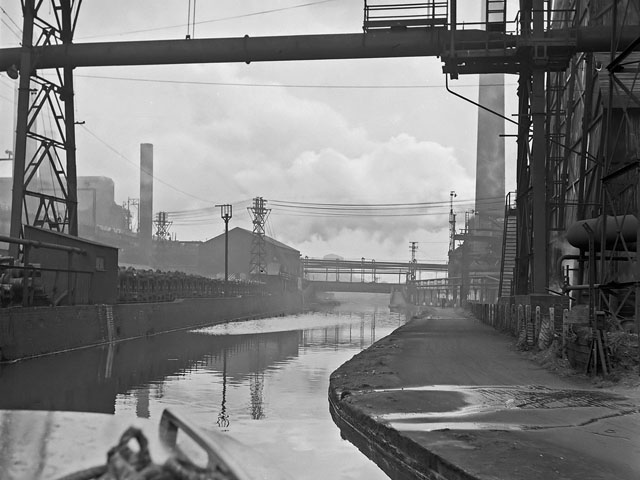
Marvin’s book doesn’t pick graduates as its focus, but in its relief, it reminds us that we, the young graduates, are products of the same processes as other class fractions and the left is not above these processes simply because we have a critique of the system we live in. It is not the fault of graduates for being graduates, it does not make them less worthy political actors. Marvin focuses on those who have gone through “disorganised abandonment”, those with “physical and psychological ailments” – the elderly still forced to work at the supermarkets, the Amazon drivers and the unemployed who “make up the contemporary working class”.
Marvin’s picture of the Potteries is, at first glance, bleak in the same way my picture of County Durham might seem. Both regions were horrendously impacted by the Beeching Cuts of 1963 that stole our railways. Now we all drive cars. Festival Park in Stoke, once the birthplace of the town’s industrial history, is now a retail ‘park’ – like Durham’s Arnison Centre or Gateshead’s Metrocentre.
Retail ‘parks’ were promoted by Thatcher. Consumerism and car ownership was an incipient part of the post-1945 consensus that grew rapidly in the 1960s. They create an ideological practice, a cultural isolation and an unconsciousness (rather than a false consciousness) where we find it harder to see a future of transformation, harder to find our communities and harder to locate ourselves in a political struggle. It is, as Marvin describes, “the unmaking of the associational life”. Even the term retail ‘park’ speaks to our desire for public free spaces, but now these spaces are conditioned by corporate monopolies.
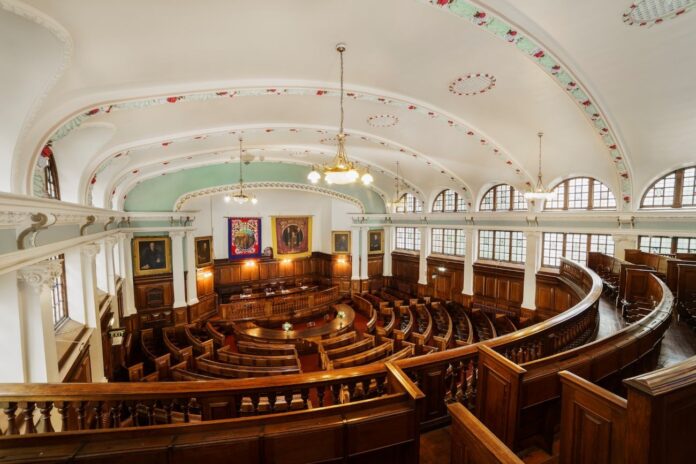
But the other aspect of Marvin’s picture is one of consciousness. People struggling together to find collectively and pride in their local area. Marvin points to a community pub, The Portland Inn, on the cusp of reopening, the preservation of Longton Town Hall won by residents. The successes of community activists, despite operating in the hardest of circumstances. In County Durham we can talk of the preservation of the Miners’ Gala, the Pitman’s Parliament now saved and renovated, the miners’ banners that are still, just, being preserved and remade by small groups of dedicated people.
Marvin’s prescription for how we build on these small triumphs of consciousness is that “we live among the people” and we commit to a “do-it-yourself socialism which seeks to combine the construction of popular institutions” like “tenants’ unions, working organising, community kitchens, popular psychiatry, health clinics and political parties… challenging the state and creating new forms of life, love and sovereignty.”

It is difficult to argue with Marvin. The combination of community organising, worker organising and political party organising is more than necessary. We must pursue the “non-reformist reforms” that can aid us in creating new subjectivities, we must “confront the capitalist system in its totality”.
But that is a difficult task, made harder by the parlous state of our leading trade unions. Sharon Graham, Unite general secretary, briefing against Ed Miliband as Burnham’s potential new chancellor because he may, although I wouldn’t hold my breath, commit the government to a serious green transition. Meanwhile, Shabana Mahmood and Wes Streeting wait in the wings and Unite’s membership look to Reform for a political voice. The zero-sum politics of their general secretary reflected in the politics of their membership – with no vision or ambition of a socialist horizon. All happening in a context where trade unions are increasingly irrelevant to workers in the private sector.
Marvin suggests that while “the strike was the predominant form of the struggle during productive booms, the riot has been the form most used in re- and post-industrial eras of capitalism…the riot… has become the hegemonic form of struggle”. The claim, likely overstated if we think of days lost to strike action in the UK versus economic impacts of riots, has within it some difficult implications that need thinking through but isn’t really elaborated on. What does seem true, in Marvin’s analysis of forms of direct action, is that the nature of the strike has changed.
Industrial action is not a tool to directly stop profits in a country where we have very little industry. Instead, strike action is often now an act of second mediation. When public sector workers, like teachers, strike they cause major disruption to the wider economy. In the context of a low-growth economy with a private sector dominated by small employers, it seems working-class struggle is increasingly directed at the state. If it is now the public sector that is at the forefront of the trade union movement, our struggle may become more conscious of the wider political change that is needed and less sectional. Teachers’ unions are not only concerned with pay but their wider political conditions, with them campaigning for free school meals, changes to the curriculum and less examinations for pupils.
But what should our political party activism look like? Marvin doesn’t speak on this a lot, but if we are to learn something from his analysis of Stoke it is that we should think like Thatcherites. Our political parties should empower the classes we want them to represent, not just make them better off.
Our political parties should consciously engage in a socialist subject formation – how do we create a powerful working class that has an associational life? It is through the rebuilding of public infrastructure, through a serious expansion of collectivism, through a reduction of the working week and through a party that both promotes local consciousness of our specific contexts and an analysis of the totality of capitalism.
Class formation is never static; it is always in motion. Class is always shifting. Marvin is right when he contradicts Marx and says that the success of the working class is not inevitable. Our defeat is not inevitable either. Consciousness can triumph. We have a village to win, a town to win, a country to win and a world to win.
The Breaking of the English Working Class by Joas Patrick Marvin will be published by Verso on 18 August 2026, price £14.99. You can pre-order it here.
Subscribe to our regular updates to receive the latest articles, analysis and news direct to your inbox at https://theleftlane.media/subscribe/