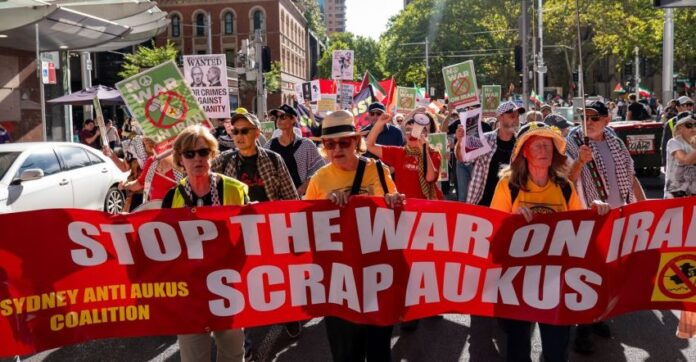
Since 28 February 2026, the United States and Israel have been waging an aggressive and unlawful military campaign against Iran, a war whose flames have consumed the lives of ordinary people in Iran, Lebanon, Yemen, Gaza, Iraq and beyond. But this war is no longer just a distant headline on the evening news. It has moved into our homes.
Australians are feeling it at the bowser, at the checkout and in the letterbox. Fuel prices, directly tied to geopolitical instability, have fed through into the cost of groceries, rent, transport and basic services. Inflation is biting. Interest rates keep climbing. And working families are being asked to absorb costs they had no hand in creating.
Meanwhile, the Reserve Bank’s response, rate rise after rate rise, squeezes borrowers and renters even tighter, all while the real drivers of this inflation have nothing to do with wages and everything to do with war, supply chain disruption and profiteering in the energy markets. The load being placed on ordinary people is the direct cost of a conflict started by powerful states and their regional allies and it is being extracted from our tables, our pay packets, our housing and our children’s futures.
This is not our war
Let’s be plain about it. This war is not being fought for the security of Australian working people. It is not being fought for the welfare of families in Western Sydney or Footscray or Townsville. It serves geopolitical rivalry, resource control and the profit margins of the arms and energy industries.
And yet we are paying for it, twice over.
Once through our taxes – under AUKUS (Australia’s nuclear submarine deal), billions of public dollars are being funnelled into the American war machine. And again, through the economic fallout that is grinding down the living standards of anyone who works for a wage or pays rent.
This is a deep injustice with a clear pattern, where costs are socialised and profits are privatised. While ordinary people battle debt, insecurity and rising bills, sections of the political and economic class are using this very crisis to consolidate power and accumulate wealth. This is not an accident. It is the logic of a system that turns war into a business opportunity.
A call to action
This article is a direct appeal to every trade union, political party, left organisation and social services body in Australia. The time has come to build a powerful, unified national campaign against this new wave of cost-of-living pressure and economic insecurity. We are facing an organised transfer of wealth, from working people to war profiteers. That transfer must be resisted with organised collective power.
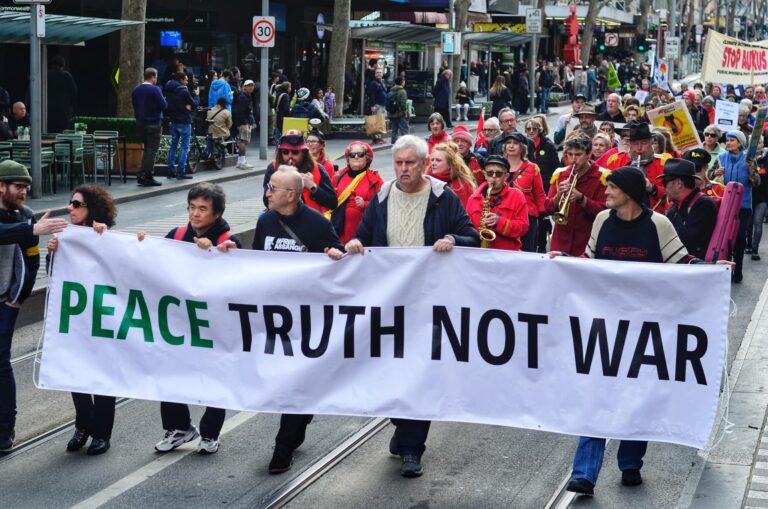
The campaign should unite around four immediate demands: –
1. Immediate wage increases that match real inflation – Workers should not be made to pay for an inflation crisis they did nothing to cause. Real wages must keep pace with the real cost of living, no excuses, no deferrals.
2. Free public transport across Australia – The cost of getting to work, school and essential services cannot continue to be a barrier to life. Public transport must be publicly funded and freely accessible.
3. Direct household subsidies for fuel and energy – Access to energy is not a luxury. During a crisis driven by global war and market manipulation, working households must be directly shielded from the price shock.
4. Immediate renter protections and rent controls – This crisis cannot be allowed to become cover for a new wave of landlord profiteering. Renters need protection now, real controls, not promises.
Who should pay?
Not us. Let’s say it plainly. The energy corporations, the war profiteers and the wealthy who have gained from this crisis should carry its costs, not the people who’ve been harmed by it. That means windfall profit taxes on energy companies. It means demanding accountability from those who have lobbied for, funded and benefited from military escalation. The revenue exists. The political will is what needs to be built.
Organise
This campaign calls on every union, every community activist, every progressive organisation in Australia to: –
– Bring this demand into the public conversation and onto the political agenda.
– Organise in workplaces, in neighbourhoods and in community institutions.
– Build a single, united voice against the transfer of war costs onto working people.
What we are facing is not a natural disaster. It is a political choice, not the kind made once every few years in a polling booth, but the kind made every day about who bears the burden and who collects the profit. That choice is being made right now, and it is being made at our expense.
It is time to intervene directly. To choose, not at the ballot box, but in the streets, in the unions and in our communities, that life comes before war, and people come before profit. The bosses didn’t ask our permission to start this war. Let’s not give them permission to make us pay for it.