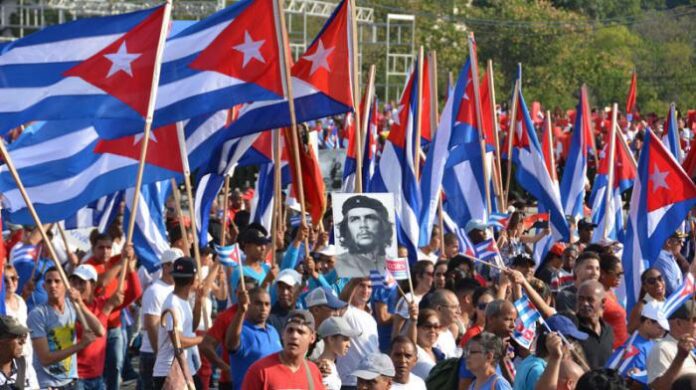
On 18 April 2026, the leaders of Mexico, Brazil and Spain made a joint statement at an international meeting in Barcelona, pledging more aid to Cuba. They appealed for its sovereignty to be respected, amid a ratcheting up of the 65-year export embargo by Donald Trump. A 2018 United Nations estimate put the economic damage of the US embargo to Cuba at $130bn, though some think this too low. From January 2026, a de facto oil blockade has precipitated an acute economic and humanitarian crisis.
Since Venezuela’s Bolivarian revolution, Cuba has become heavily dependent on discounted Venezuelan oil, so the sudden ending of these imports after Trump deposed Maduro destabilised its energy system. At the recent annual celebration of the 1961 defeat of the US-planned Bay of Pigs invasion, Cuba’s leader, Miguel Diaz-Canel, said: “Cuba is not a failed state. Cuba is a besieged state, Cuba is a state facing multidimensional aggression – economic warfare, an intensified blockade and an energy blockade.”
This follows similar pressure applied against Venezuela, ending in January with the abduction of its president. Trump has since floated invading the island to do much the same.
But Cuba does not face this US onslaught alone. In March, planes, boats and delegations from across the world converged on the island. Suitcases packed with antibiotics, cancer drugs and surgical supplies were stacked in long rows across the airport arrival hall. Boats crossed the Caribbean, docking in Havana. Solar panels and generators were unloaded and rushed to hospitals struggling to keep essential services running. The Nuestra América convoy had arrived, no doubt inspired by the Gaza Flotillas! Subsequently, a Russian oil tanker has delivered crude oil – with another to follow – and Mexico has sent a shipment of medical supplies and other humanitarian aid, pledging more. Sanctions-busting is back!
The blackouts
In November 2025 we visited the island and witnessed the effects of Trump’s blockade at first hand. At Trinidad, on the south coast, every evening we walked down the steep hill to local restaurants in the pitch black, lighting our way with mobile phones. Below us, in a town of 30,000 people, the only lights were those of restaurants with their own generators.
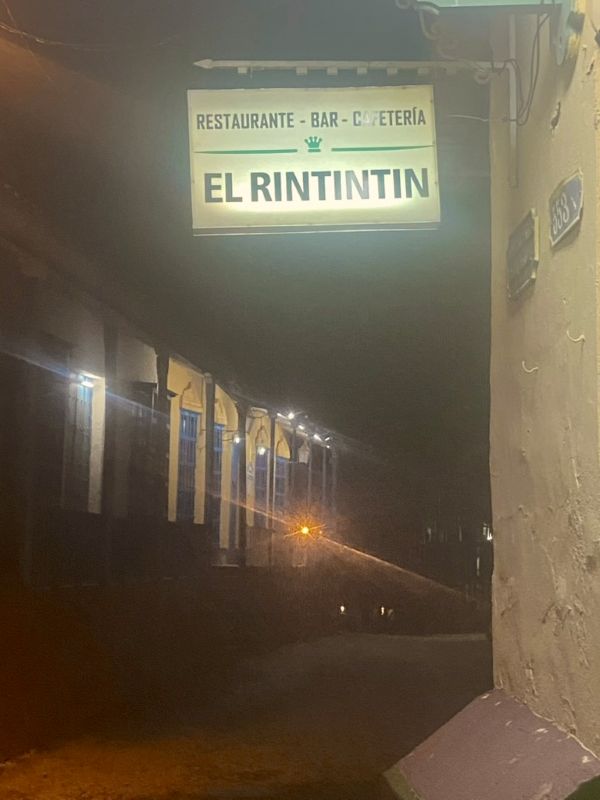
At El Rintintin restaurant (pictured above) we met a German traveller, a regular visitor to Cuba. He told us it was never like this on previous visits and confirmed what we had been told in Havana by a Cuban blogger – that Marco Rubio, brought up in Miami by a right-wing Cuban emigre family and a crusader for US action to bring about regime change, had inspired the ratcheting up of the US embargo, causing increasing poverty and an energy crisis.
We’d already had to dodge beggars, hustlers and prostitutes working the streets of old Havana, people who had not existed in any numbers just a few short years ago. Outside the Che Guevara mausoleum in Santa Clara, we learned about the generational divide, whereby loyalty to the revolution and government is highest among older people whereas younger people are more often critical of the government, a pattern intensified by this crisis.
Economic warfare bringing on a social crisis
The journalist and commentator Owen Jones visited Cuba in April and describes a second national blackout in less than a week, with families cooking on charcoal stoves, rubbish piling up in the streets, flies swarming and water pumping stations failing due to fuel rationing priorities like hospitals. Refrigeration is failing too.
Tourism, the major source of foreign currency, is collapsing. Flights are being cancelled. Hotels are closing. People are exhausted. Many hospitals cannot carry out crucial tests; key medicines are in short supply and energy outages interrupt operations which involve high-tech theatre equipment. The Nuestra America convoy meant some supplies reached clinics and wards already rationing care, but the crisis remains. This is an economic war crime.
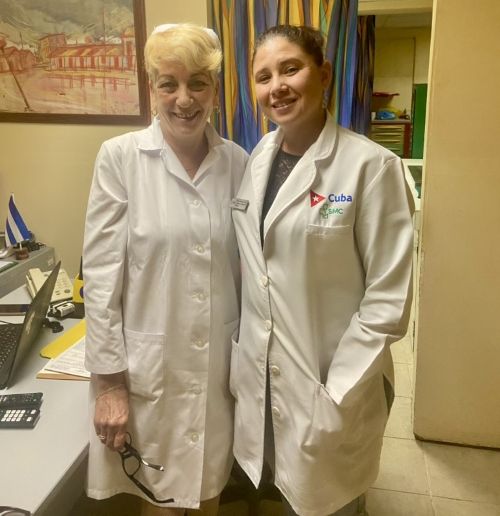
On the final leg of our holiday – a beach resort on the north coast – we both got unusually bad diarrhoea, so bad we called for a doctor. A nurse came too within the hour, the first of three visits in 24 hours. They gave us an injection each of oral medicines, a two-litre bottle of Dioralyte and two adult nappies for the flight home. Oh, for a health system like that!
Sunrise after the blockade?
The oil blockade illustrates the wisdom of a rapid renewable electricity transition, more cost-effective than continued investment in fossil fuel capacity and reducing Cuba’s vulnerability to the USA’s economic war crimes.
Over the last year, Cuba has brought more than 1,000 megawatts of solar online with Chinese imports, assistance and financing which is set to continue over the coming years. This is one of the most rapid solar expansions in the world. Cuba’s government has long recognised the vulnerabilities created by reliance on imported fuel and its 2025 national strategy for energy transition aims for 100% renewable energy by 2050. A 2024 study found that a 100% renewable electricity grid would require investment of $25.8bn.
An April article by the Transition Security Project argued that, for an investment of around $8bn, Cuba would reach 93% renewable electricity generation and no longer need to import fossil fuels for electricity generation, giving it the highest non-hydro renewable electricity share in the world.
Cuba has past experience of carrying out a rapid economic transition. The end of Soviet support in the 1990s forced a rapid shift away from a sugar cane monoculture towards agro-ecology and greater food self-sufficiency, a process now widely studied as a model of economic resilience.
The sudden growth of the private sector economy in Cuba
Another response to the current crisis is this month’s approval of a measure allowing expat Cubans to invest in the country. The new decree specifies that this means participating “in the Cuban economic model”. This is a further move away from a centralised production system run by state-owned enterprises, when the role of the private sector had already begun to change with the 2021 authorisation of private enterprises with up to 100 employees in certain sectors of the economy. By last year, they employed more than 30% of the economically active population and contributed15% of the country’s GDP. Regular visitors confirm that the quality of restaurants has increased massively since.
Private entities can now directly import oil and other goods, a way of circumventing the US ban, and last month the government authorised partnerships between public and private companies, with the government maintaining a state monopoly in the health, education and defence sectors.
The transition to renewable energy must be under public ownership
Extensive private control of the power system would move the country further away from public control, energy democracy and sovereignty. Puerto Rico is a cautionary example. Under de facto US rule, its electricity system is undergoing privatisation, but privatised electricity has not delivered reliability, affordability or a rapid shift to renewables, which suggests an externally managed and privatised reconstruction is a poor model for Cuba placing itself out of the reach of a US energy blockade.
Cuba is a BRICS (an intergovernmental organisation comprising major emerging economies in the global south) partner country and may be able to access financing through the associated New Development Bank. United Nations funds, like the Green Climate Fund, have already supported solar projects in Cuba.
We found high levels of social trust among Cubans, with hitch-hiking a popular method of transport. They are protective of their independence and proud of their multiracial society with a binding popular culture. Every Friday, over recent weeks, hundreds of thousands of Cuban reservists attend military training, so that, in the words of Cuban president Diaz-Canel, they are ready for any US attempted invasion.
Subscribe to our regular updates to receive the latest articles, analysis and news direct to your inbox at https://theleftlane.media/subscribe/