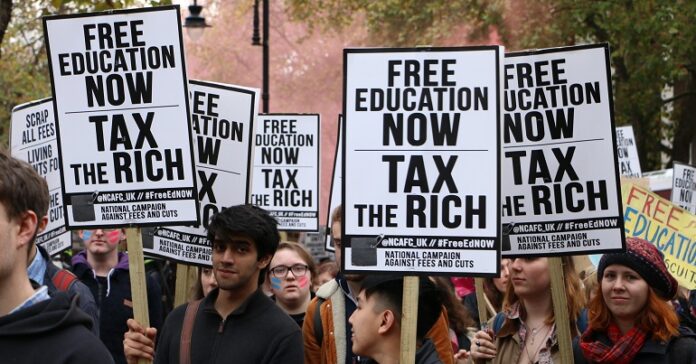
“Unreasonable terms” and “A worse financial impact than expected” – just two of the damning responses of 50,000 former students answering a questionnaire collecting evidence for the Commons Treasury select committee inquiry into student loans and graduate taxation.
But how did we get here, plunging our young people into greater and greater debt which will hang over them for most of their working lives? I am privileged to have been born into a generation in which not only were tuition fees covered by our local authority but was able to draw on a maintenance grant to enable me to cover the costs of living away from home. But by the time my own son went to university, all this had changed. No longer were tuition fees covered and students (or Bank of Mum and Dad) had to find their own living costs. The burden of higher education funding had landed on the individual.
The Thatcher government set up the Student Loans Company in 1990 after passing legislation enabling ‘top-up’ loans to help living costs, ostensibly at a low interest rate. But the body blow came with the 1997 Dearing Report which recommended that students should contribute towards the costs of their higher education.
Blair’s government embraced the terms of the report and in 1998 brought in tuition fees (£1,000 per year) and abolished maintenance grants for all but the poorest students, instead replacing these with repayable student loans. So, unless the Bank of Mum and Dad was available to assist paying both fees and maintenance, potential students had no alternative but to take out a loan. I should add at this point that students both then and now sought to supplement their income by taking up part-time or casual jobs, but as we shall see, it became increasingly difficult to support yourself without also taking out a loan.
Subsequently, the Blair government passed another Higher Education Act in 2004, which set university tuition fees at a maximum cap of £3,000. Unsurprisingly, higher education establishments took this as a green light to increase all fees to this level. Still, a student could fund their education (if not their living) for less than £10,000, arguably not too bad, considering the overall benefits likely to accrue from having a degree.
But no, this was not to last. Despite their campaigning on abolishing tuition fees during the 2010 general election, the Liberal Democrats decided to abandon integrity for a taste of power and enable the Tory government of David Cameron, with the result that in 2012 (forgetting the lesson of the £3,000 ‘cap’ only eight years previously) decided that the cap should be raised to £9,000.
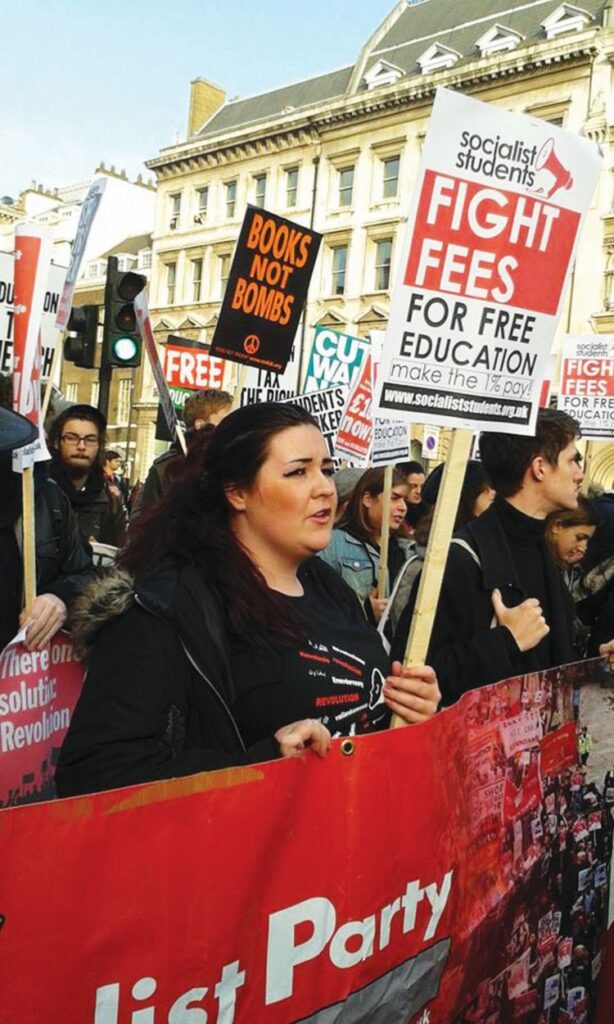
A lifetime of debt for students
Of course, a scramble to the top among universities quickly followed, so now a student could educate themselves for a mere £30,000. Not exactly an amount that could be undertaken through part-time and casual work alone, never mind the costs of living and studying. And so was ushered in a potential lifetime of debt for students from which many are still suffering, the now notorious “Plan 2” loan.
So, back to the present day and the Treasury select committee enquiry. Of 49,357 respondents, a massive 83% reported that the financial impact of these loans was worse than expected, with 93% saying that the terms were not reasonable. Well over half (57%) stated that they did not understand the terms and conditions before taking out the loan. And just over half (51%) would not have taken out the loan if they had to do it again.
Effectively, school leavers were mis-sold Plan 2 loans by a bright and cheerful advertising campaign (shown in schools) which equated the costs of loan repayment with taking out a mobile phone contract. Somewhat misleading, given what the costs would actually be.
The terms of taking out the loan were equally undersold. Students were told that the cost of repayment would be (a) only applicable over a certain income threshold and (b) would be a simple formula of “rate of inflation + 3%”. All true as far as it goes. But what seems to be a good idea when inflation rates are low and fairly stable, becomes more challenging when real world events – and chancellors of the exchequer – come along.
Let’s unpick the flaws in the process. Firstly, the rate of inflation. There are more ways of calculating this than you might think, but the one most commonly used today is the Consumer Price Index. However, the index used to calculate the loan repayment is still the Retail Price Index (RPI).
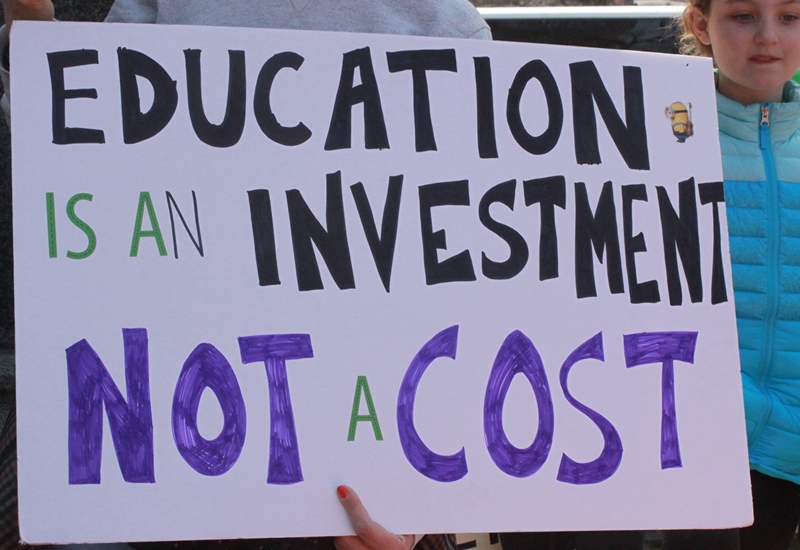
The great inflation con
RPI is known to give a higher level of inflation than is actually the case, often by as much as 1%. This doesn’t sound a lot, but can make a big difference in real terms, especially when inflation is high. Interestingly, Royal Statistical Society (RSS) fellow Jill Leyland wrote in an RSS guest blog back in March this year that the method used for calculating RPI is inherently flawed and gives rise to accusations of government “inflation shopping” – using one (higher) calculation when it comes to receiving money and a lower one when paying it out. And remember that interest on the loan is not paid back at the rate of inflation, but an additional 3% on top.
Then there is the lack of information in the promotional material about such aspects of deductions from wages such as income tax or national insurance contributions and pensions. Payments are calculated on gross income, not net. Those people earning £25,000 a year will not receive that amount, but considerably less.
A third factor contributing to the increased burden of student debt is that, as wages have risen, the threshold is being reached more quickly, so earlier in a person’s career. In fact, the repayment threshold in 2025 was only £3,000 higher than the minimum wage. The fact that the current chancellor is going to freeze the threshold for three years will make this worse.
Then we have the inherent injustice that those students who are wealthier (or who have relatives able to help them overpay) will, over time, pay back less in interest overall than students who are unable to do this. A student loan is not so much a loan as an extended tax, lasting for 30 years for those unable to pay it off sooner.
It should be remembered that all debts still owing after 30 years will be cancelled, but that doesn’t stop the interest being added and paid for in the time between. Add to that, that many former students are overpaying (without always realising) because HMRC takes the amount on a monthly basis when it should be calculated over the year. This can be reclaimed, but only if you know it has happened and how to pursue it. And overall, it is likely that at least 30% of all students will never be able to pay off their debt.
I’ll give the last word to the tax campaigner Richard J Murphy, who back in 2024 summed things up on this issue pretty well. “This charging of interest on these loans is unnecessary. So, let’s stop it!”
Subscribe to our regular updates to receive the latest articles, analysis and news direct to your inbox at https://theleftlane.media/subscribe/