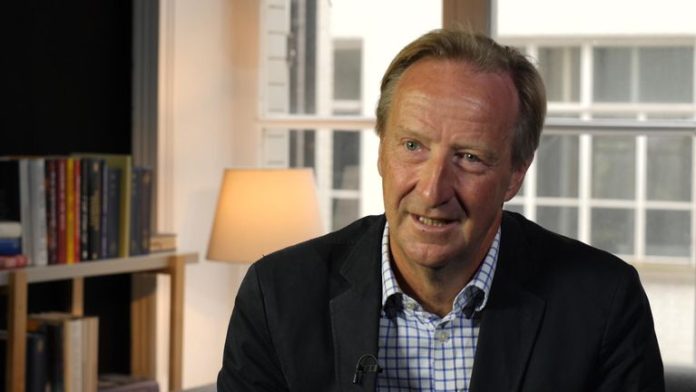
On 25 March, the former head of MI6 Sir Alex Younger told the Economist that “the Iranian regime has been more resilient than I think anyone would have expected”. Although the journalist interviewing stared back mutely, possibly implying agreement, specialists on the region such as myself are not surprised at all to see Iran resistant and resilient – and the same is no doubt true of interested and curious ordinary citizens who are following events closely.
For Iran, this war is existential. It is not just existential for the Islamic government established in 1979 if it wishes to stay in power, it is existential also for the fabric of Iranian society as a whole, which has seen the killing and collapse caused by US, Israeli and Western military aggression around the region in Afghanistan, Iraq, Libya, Palestine, Yemen and Lebanon, to name just some examples.
Living in a bubble
During the Cold War, many in Western security services believed that conventional Soviet forces were capable of moving through Western Europe ‘like butter,’ and it was only the mutually assured destruction (MAD) of nuclear weapons that prevented this from occurring.
The dramatic collapse of the eastern bloc between 1989 and 1991 and the subsequent opening of Soviet archives showed that this was not so. The Soviet Union knew that it was weaker in conventional and nuclear capabilities compared with the West and it sought merely to protect its vital interests and survival in Europe against the risk of a first strike by the West.
Organisations and professions develop sub-cultures based on those who choose to join them and the work that they carry out. It is good that those charged with the defence of the realm consider all potential threats, however implausible. However, it is a mistake then to advance from worst-case scenarios towards paranoid fantasies, misinterpreting institutional and cultural differences combined with rational self-interest on behalf of foreign states as irrational aggression.
Getting out of bubbles
Academics and researchers have their own institutional bubbles and intellectual blind spots. However, a major crisis such as the war in Iran requires not just high-level expertise, but a plurality of expertise. This plurality and debate should be present in advice to governments but also in the media and public debate.
Military and intelligence officials have a stronger understanding of security logistics than most independent or academic researchers, but self-selection into the profession means that they are more likely to be hawkish in their personal views and focused on operational threats rather than political solutions.
If governments and media alike only defer to such voices as ‘expertise’, a widely distorted version of the current conflict and alternatives to war is likely to emerge.
Iranian strategy
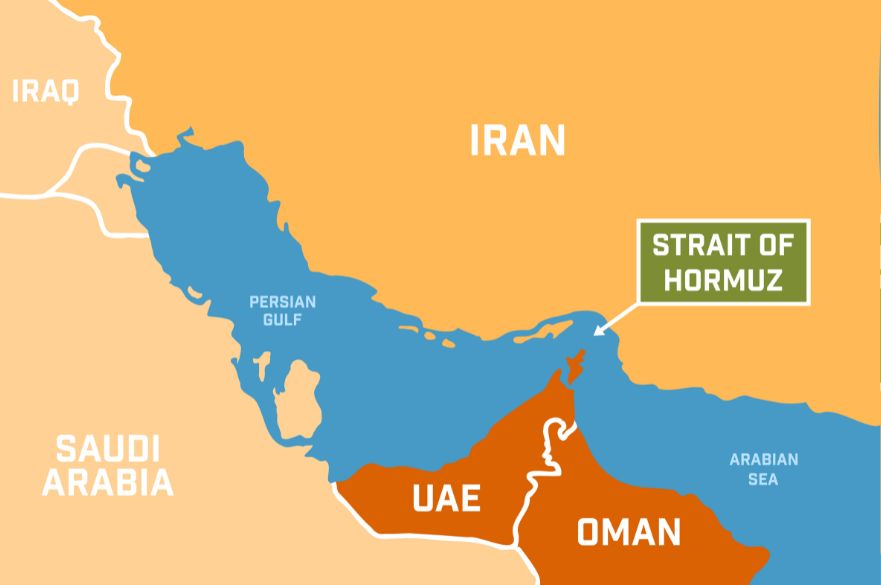
Iran has war-gamed a unilateral attack by the US and Israel for many decades and it is now implementing carefully prepared plans independently of the decapitation and assassination of its leadership. Closure of the Straits of Hormuz in Iranian sovereign waters was long known to be an automatic outcome of war disrupting global supply chains. Furthermore, Iran has initiated ‘tit-for-tat’ responses against targets in the region with decision-making reportedly devolved to individual commanders to establish operational resilience against further attacks on the country’s political and military leadership.
Sir Alex Younger states that Iran has “engaged in what’s called horizontal escalation, i.e. firing rockets at anybody within range”. This is a convoluted description of military activities in which firing projectiles – by definition, at objects within range – is a usual course of affairs. The inference that Iranian attacks are indiscriminate is misleading, given that Iran is pursuing a tit-for-tat response to a war of aggression and US and Israel assaults have led to much higher levels of civilian deaths across the region.
What is Britain’s interest?
In 2015, Britain was a leading negotiating partner bringing about the Iran nuclear deal (Joint Comprehensive Plan of Action, JCPOA) that swapped limits to Iran’s nuclear capabilities for a path to sanctions relief. Not only was a road towards peaceful deescalation a boon for the region and the world, this was an opportunity for British businesses and industries investing in Iran’s economy as it was opened to the world.
Why then does Sir Alex Younger state that British intelligence officials have “faced the violence and the brutality of the Iranian Revolutionary Guard Corps for most of our careers”, when the UK was in fact a leader in peaceful negotiations and deescalation?
When the US withdrew from the JCPOA in 2017, the UK and other countries expressed frustration (albeit little action), suggesting that political priorities and interests diverged from those set by the US.
Now, energy price rises caused by this war of aggression hurt British households and businesses alike, harming our domestic interests.
Oh, and our taxes pay for this
Alex Younger is retired senior civil servant whose large salary and benefits are paid for by our taxes in Britain. If such individuals cultivate dangerously hawkish views on foreign policy and make failures of assessments such that Iran’s strategic defence and resilience comes as a surprise, then we must ask what we are paying for? Currently, we are paying for these errors again at the petrol pump – and much greater risks remain present.
As the former spy chief asserted that no one expected Iran to prove resilient and a journalist gapes back at him in silence, perhaps to indicate agreement, maybe we should be considering that when the experts are so clearly wrong, better experts are needed with a greater plurality of views, championed by an independent media. The security establishment should not be sleepwalking us towards a wider war.