Politics is the reflex of economics. Empires rise and fall, not because of politics, but because of economics, though politics can speed up or delay this process. US political hegemony was built on its economic dominance after the second world war and until China emerged, the US had no peer competitor.
Chinese economic development went through multiple phases. The first phase began with the Chinese Communist Party acting as gang master, the second phase was sub-contracting and the third was joint ventures. The final phase was the emergence 15 years ago of technically advanced Chinese corporations such as Huawei. This marked the transition of the Chinese economy from a source of western profit to a source of global competition.
The first political reflex by the USA to the changing economic conditions was Obama’s pivot to Asia, which was followed in 2017 with additional embargoes on Huawei. For the first time, a Chinese company had come to dominate a part of the global communication sector which the US found intolerable. The cascade of embargoes on Chinese companies which followed was reminiscent of the 1986 US-Japan semiconductor trade agreement, which together with the forced appreciation of the Yen via the Paris Accords, ultimately led to the collapse of the Japanese economy. Clearly the US was seeking a similar outcome.
The US had declared economic war on China. It failed. China was able, by means of state planning and ample foreign reserves, to develop complete technospheres to overcome technical bottlenecks. So, while the west gained a short-term advantage, it came at the cost of longer-term disadvantages – China hot-housing technological development.
US seeking to isolate China and Russia
As the economic environment changed, the US sought to use politics to hobble China’s ascent. The US has 30 major bases and dozens of minor bases located on the southern flank of China, but none on the northern flank because of Russia. The proxy war in Ukraine, together with economic embargoes on Russia, was designed to foment regime change in Moscow leading to the dismemberment of Russia, thereby completing the encirclement of China.
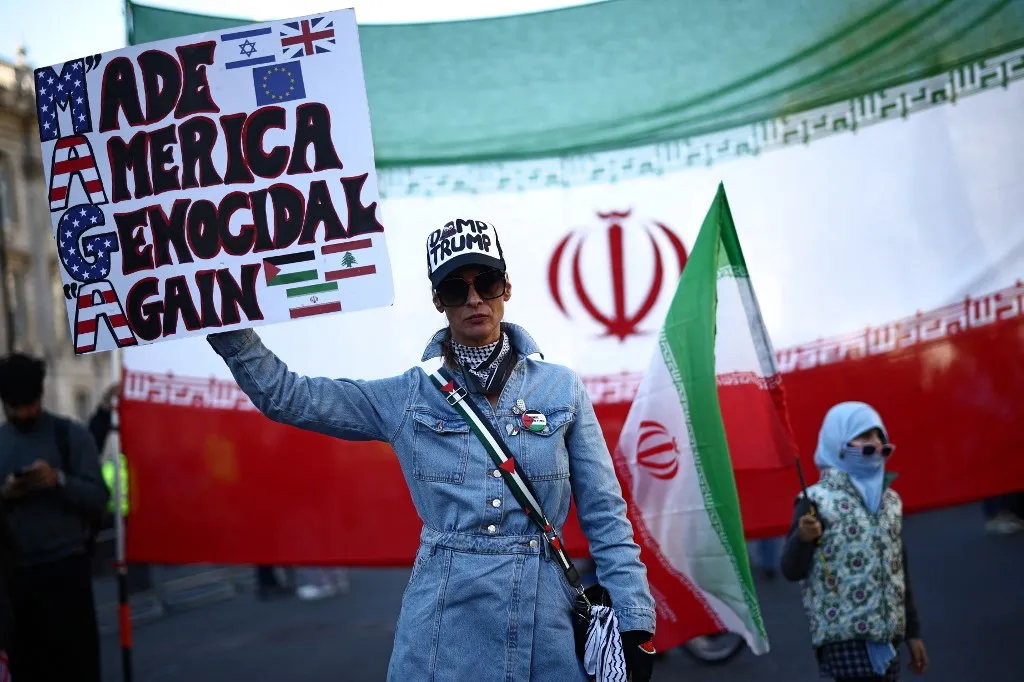
The war in Ukraine ended up weakening instead of strengthening the west. The next opportunity to isolate China and Russia opened with the collapse of the Assad regime in Syria, which made it easier to attack Iran by air. Iran is crucial to both Russia and China. It protects the underbelly of Russia and it is a key part of the ambitious Chinese Belt and Road project. Additionally, it offers China a presence in the Gulf.
It is said that the war against Iran is an Israeli project, one driven by Tel Aviv using its capture of congress and the White House. In short, that US foreign policy in the Gulf is Israel First not America First. This narrative is popular on the internet with figures such as professor Mearsheimer, Colonel McGregor and Scott Ritter.
This assumes that the US is the agent of Israel. But history says otherwise. The state department opposed the formation of the Israeli state in 1948. Then there was Suez in 1956. Kissinger blocking a pre-emptive strike in the 1973 Yom Kippur War. Reagan demanding Israeli withdrawal in 1982 from Lebanon. More recently, Obama’s JCPOA deal with Iran.
The war in Iran is not about securing Israel’s existence but securing the US’s western flank as it shapes the Pacific war theatre. Both the 2025 and 2026 national security strategies for the first time singled out China as the US’s main adversary. The Middle East was subordinated which would not have happened had US foreign policy been Israel First rather than America First.
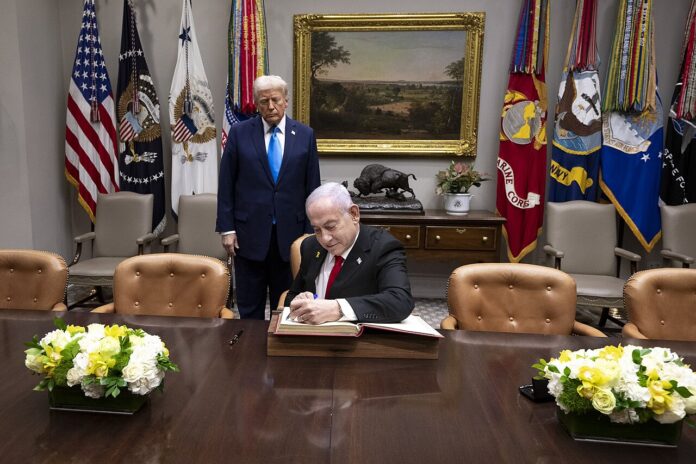
This is the context for the Iran war. The timing of the recent war is educative. Trump had invited himself to Beijing at the end of March and needed to present president Xi Jinping with a fait accompli – the crushing of Iran titling the balance of the meeting. Preparations for the summit began in January 2026. Then Netanyahu was summoned to Washington on 11 February, no doubt to convince Trump that a war with Iran was doable despite Pentagon reservations. The date of the summit, in anticipation of a short war, was announced a week before Israel attacked Iran on 28 February.
Due to Israel’s inability to overwhelm Iran, the summit was postponed and is unlikely to take place until the war is definitively over. Kissinger famously said: “It may be dangerous to be America’s enemy, but to be America’s friend is fatal”. Israel is discovering just how fatal. If the cost of defeating Iran and Yemen is the destruction of the state of Israel, the US will consider this an acceptable price – lobby or no lobby.