There is growing demand from the trade union movement for a second employment rights bill. Union leaders say the Employment Rights Act 2025, which passed last December, left out too much of what was promised and that a second bill is now needed, according to Keith Ewing, president of the Institute of Employment Rights and John Hendy, the institute’s chair.
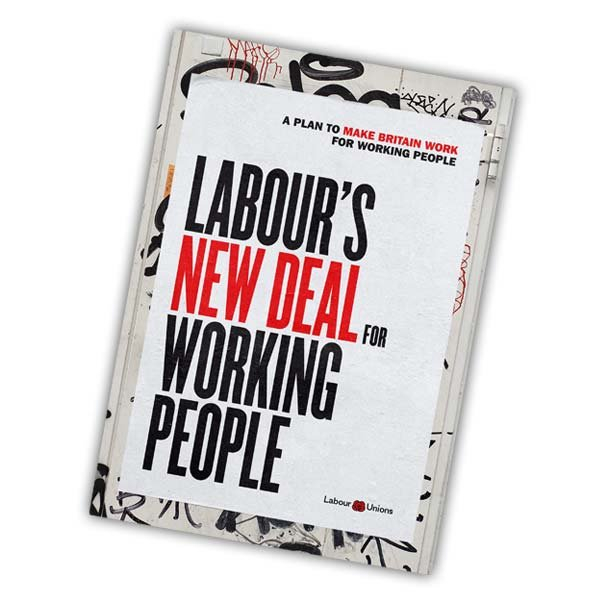
Labour set out its blueprint for the legislation in the 2021 green paper A New Deal for Working People, endorsed by that year’s party conference and championed by Keir Starmer and Angela Rayner. Just before the 2024 election, this became Labour’s Plan to Make Work Pay.
Ewing and Hendy argue that the scale of Labour’s election win should have guaranteed the New Deal was delivered in full: “At the election on 4 July 2024 Labour won with a majority of 174 over all other parties combined”. Instead, they say, the promises got watered down – “we now need to put back what was taken out”.
The Institute identifies four key gaps. First, the act fails to create the single legal status of ‘worker’ that the New Deal promised – meaning everyone working for someone else and not genuinely self-employed, would get full statutory rights. The government says it will consult on this but has set no date. The gap matters because it hands employers an incentive to reclassify staff to dodge the act’s protections: an employee reclassified as self-employed loses the right not to be unfairly dismissed, while ‘limb (b) workers’ have fewer rights than employees and those with neither status – such as Deliveroo riders – have almost none.
Second, the act doesn’t restore multi-employer collective bargaining, which would let unions negotiate minimum terms across an entire sector, as in the past. The government rejected an amendment that would have enabled sectoral bargaining anywhere. It has created negotiating bodies for adult social care and school support staff but says these don’t count as collective bargaining – and, the institute argues, don’t meet international legal standards, since the government controls what’s discussed, who takes part and can overrule the outcome.
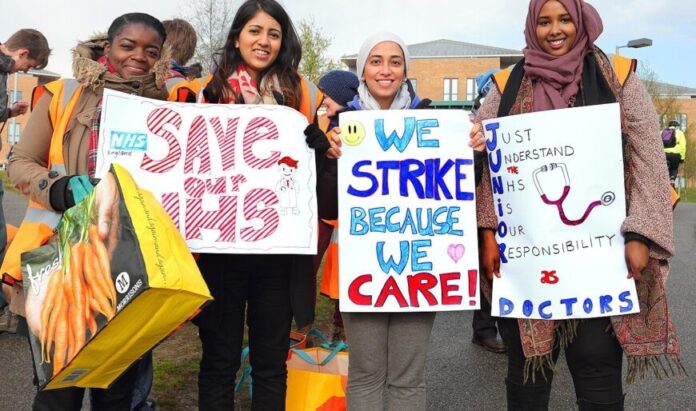
The institute does credit the act with real gains on industrial action law: repeal of the Strikes (Minimum Service Levels) Act 2013 and much of the Trade Union Act 2016, shorter strike notice, simpler ballot rules, an end to the 50% turnout threshold and stronger protection against dismissal for those striking officially. Electronic balloting may also be introduced, which would remove the 40% threshold in the six sectors where it currently applies.
But this falls well short of undoing the restrictions piled on by Conservative legislation between 1980 and 1993. The New Deal had promised industrial action law that fully complied with the UK’s international obligations – obligations that, Hendy and Ewing say, bodies have found the UK in breach of for over 35 years. The 2025 Act “redresses a few breaches”, but leaves intact the bar on solidarity action and the requirement that unions give employers detailed notice before balloting – both repeatedly condemned internationally.
Finally, rather than collective negotiation, the act still relies on individual workers taking complaints to employment tribunals, where – without a union behind them – they’re often, in the institute’s words, “uncomfortable and outgunned”. Tribunals currently have 65,000 open cases and waits of up to three years; employers win more cases than workers and a third of compensation awards to those who do win are never paid.
For the institute, the 2025 act can only be a first step. The priorities that remain – single worker status, sectoral bargaining, reversing Tory strike restrictions and cutting reliance on costly tribunal litigation – are exactly what a second bill would need to address.
Whether Andy Burnham’s government will act is another question. Jonathan Reynolds is back as business secretary in Burnham’s reshuffled cabinet – the department that owns the Employment Rights Act brief. In his last stint there, Reynolds conceded to employer pressure to water the act down every time it was demanded. The trade union movement will be watching closely to see whether Burnham’s promises to workers survive contact with his own cabinet – and if they don’t, calls for a second Employment Rights Act will only grow louder.
Subscribe to our regular updates to receive the latest articles, analysis and news direct to your inbox at https://theleftlane.media/subscribe/